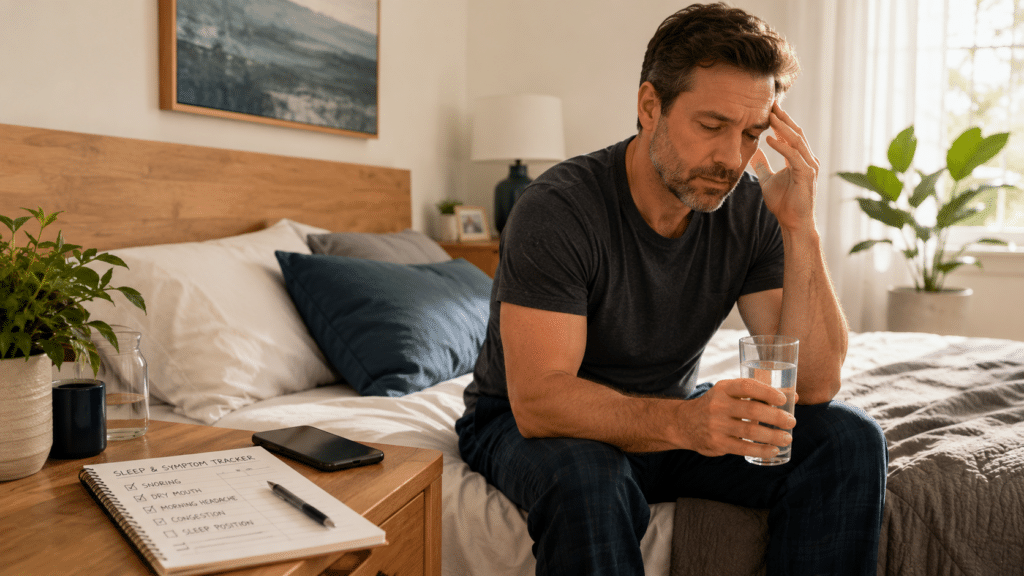

Bruxism is easy to dismiss until something changes. A tooth chips. Your jaw aches every morning. Your temples hurt after a stressful workday. Your night guard starts to look chewed through. These are signs that clenching or grinding may no longer be something to watch casually.
Medically responsible content note:
This article is for education only and does not diagnose or treat medical, dental, or sleep conditions. Bruxism, jaw pain, headaches, snoring, breathing pauses, and respiratory symptoms can have multiple causes. Seek care from a qualified medical, dental, sleep, or orofacial pain professional when symptoms are persistent, worsening, severe, or disruptive.
If you are wondering when to see a dentist for bruxism, look for signs that clenching or grinding is affecting your teeth, jaw, sleep, or daily comfort. Tooth wear, chips, cracks, tooth sensitivity, morning jaw pain, temple headaches, ear pressure, a damaged night guard, or worsening symptoms are all reasons to schedule a dental evaluation.
Bruxism can show up as awake clenching during the day, sleep bruxism at night, or a mix of both. Current consensus definitions describe bruxism as repetitive jaw-muscle activity that may include clenching, grinding, bracing, or thrusting of the jaw. They also recognize awake bruxism and sleep bruxism as distinct patterns, which is why timing matters.1,2
This article is a practical decision guide, not a diagnosis tool. Its purpose is to help you recognize when symptoms are worth discussing with a dentist before tooth damage, pain, or sleep problems become harder to manage.
If you are still trying to understand the broader pattern, start with our complete guide to bruxism and jaw tension symptoms, causes, and treatment options.
Quick Answer: When to See a Dentist for Bruxism
You should see a dentist for bruxism if you notice tooth wear, chipped or cracked teeth, tooth sensitivity, recurring jaw pain, morning headaches, ear pressure, facial pain, a damaged night guard, or symptoms that are getting worse.
You should also seek care if a partner hears grinding at night or if clenching is affecting sleep, eating, work, or daily comfort. Bruxism can affect more than your teeth. It can involve the jaw muscles, temporomandibular joints, facial pain patterns, sleep quality, and daily habits.
See a dentist if you notice:
- Tooth wear, chips, cracks, or sensitivity
- Jaw pain that keeps coming back
- Morning headaches with jaw soreness
- Ear pressure or facial pain that overlaps with jaw tension
- A night guard that is cracked, worn, painful, or not helping
- A partner hears grinding at night
- Clenching is affecting work, sleep, eating, or daily comfort
- Snoring, gasping, choking, dry mouth, or daytime fatigue along with grinding symptoms
Some symptoms may need dental care. Others may need medical evaluation. The value of seeing a dentist is that they can help sort the pattern and identify what should happen next.
Signs of Teeth Grinding Are Not Always Obvious
Many people do not know they clench or grind their teeth until someone else notices. A dentist may see flattened tooth edges. A bed partner may hear grinding at night. You may notice that your jaw feels tired when you wake up, or that your temples ache after a stressful workday.
Awake bruxism can happen while you are working, driving, scrolling, lifting, concentrating, or managing stress. It often feels automatic because it becomes tied to attention, pressure, posture, and nervous system activation. Sleep bruxism is different because it happens while you are asleep. You may not be aware of it unless you wake with symptoms or someone hears it.
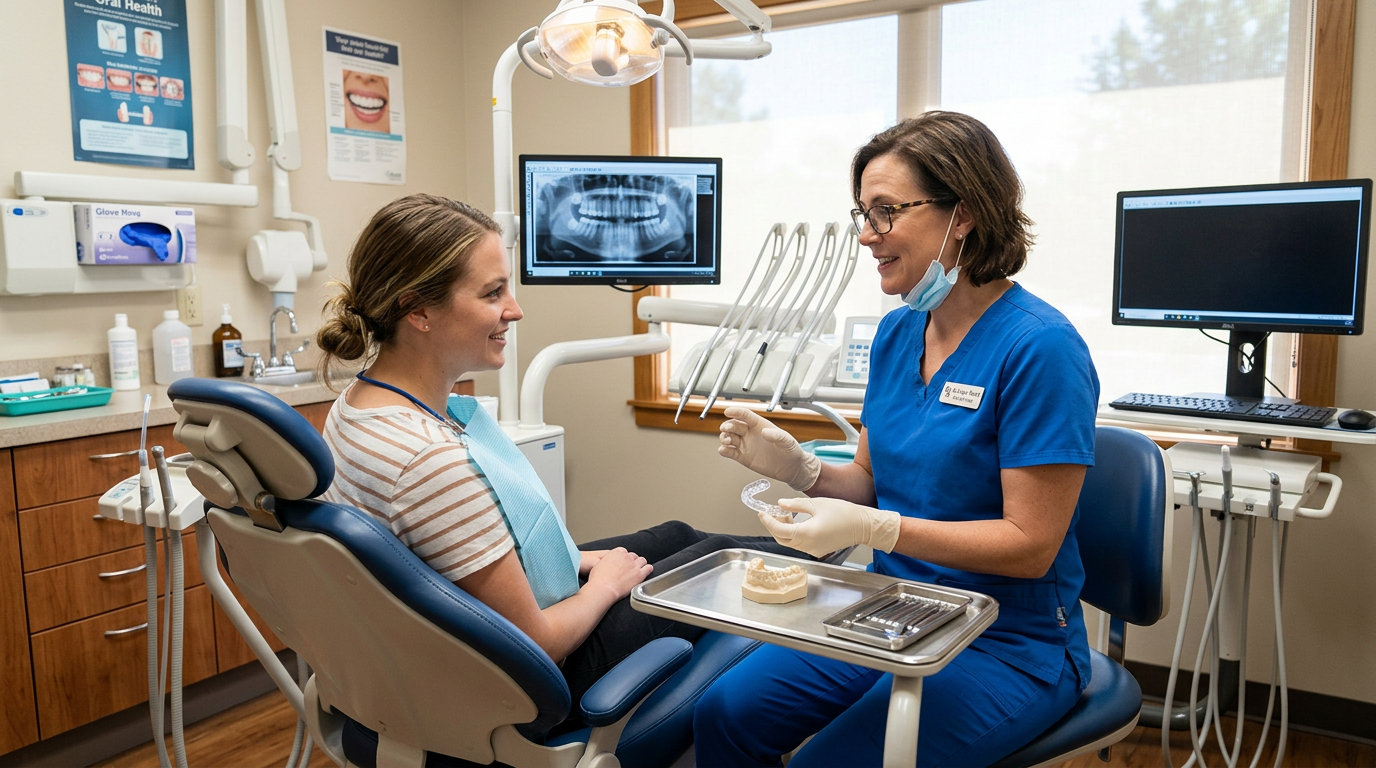
A dental visit can connect clues that are easy to miss. Your dentist may check for tooth wear, enamel chips, cheek marks, tongue scalloping, muscle tenderness, appliance wear, or damaged restorations. These signs do not always prove bruxism by themselves, but they can help your dentist decide whether clenching or grinding may be part of the picture.
If you are unsure whether your symptoms happen during the day or at night, read our guide to awake bruxism vs sleep bruxism and why the difference matters.
See a Dentist If You Notice Tooth Wear, Chips, or Cracks
Visible tooth damage is one of the clearest reasons to talk to a dentist about bruxism. Teeth are strong, but repeated force can leave marks over time. You may notice flat biting edges, small chips, rough enamel, cracks, sensitivity, or changes in the way a filling, crown, or veneer feels.
A dentist can check whether the pattern looks consistent with clenching or grinding. This matters because not all tooth wear comes from bruxism. Acid erosion, reflux, diet, aging, bite patterns, abrasive habits, and other dental conditions may also change tooth structure. A dental exam helps separate these possibilities.
Any new crack, sharp edge, sudden sensitivity, or painful bite deserves a dental call, especially if biting feels different. Tooth wear from bruxism is easier to manage when it is recognized early. The goal is prevention, not repair after damage has already occurred.
If your main concern is damage to your teeth, you may also want to read why a mouthguard protects teeth but may not stop clenching or grinding.
Talk to a Dentist When Jaw Pain Keeps Coming Back
Jaw pain that keeps returning deserves attention. A little tightness after a stressful day may improve with rest, awareness, and softer chewing. But repeated pain, worsening pain, or pain that changes how you eat, yawn, speak, or sleep should not be ignored.
If jaw pain lasts more than a few days, returns often, limits chewing, or changes how wide you can open, it is time to ask for help. Temporomandibular disorders can involve the jaw joint and the muscles that control jaw movement. Symptoms can include jaw pain, stiffness, limited movement, clicking, popping, locking, headache, and ear-area discomfort.3
A dentist evaluating jaw clenching may check your teeth, bite, jaw muscles, jaw joints, range of motion, and signs of parafunctional activity. If your symptoms suggest a more complex pain condition, your dentist may refer you to an orofacial pain specialist, physical therapist, physician, or another clinician.
If your pain is strongest when you wake up, read our article on morning jaw pain and whether sleep bruxism, daytime clenching, or both may be involved.
Morning Headaches or Temple Pain Can Be a Clue
Morning headaches and temple pain can sometimes overlap with jaw clenching. The temporalis muscle sits along the side of the head and helps close the jaw. If this muscle is overworked, it may feel tender, tight, or painful near the temples.
This does not mean every headache is caused by bruxism. Headaches can come from many causes, including migraine, tension-type headache, sleep disorders, medication effects, dehydration, blood pressure changes, sinus issues, and medical conditions that need evaluation. But if your headaches often appear with jaw soreness, tooth sensitivity, facial muscle fatigue, or morning tightness, it is reasonable to bring that pattern to your dentist.
A dentist can help determine whether jaw muscle overload may be contributing. A physician may be needed for headache patterns that are new, severe, unusual, sudden, or paired with fever, confusion, weakness, vision changes, neurological symptoms, or a recent injury.
If your headaches often sit near the temples, read how jaw clenching and temple headaches may be connected.
Ear Pain, Ear Pressure, or Facial Pain Should Not Be Ignored
Ear symptoms can be confusing because the jaw joints and chewing muscles sit close to the ear. Some people with jaw tension or temporomandibular disorders report ear-area discomfort, ear fullness, pressure, or pain near the jaw joint.3 The connection is not always simple, and you should not assume ear symptoms are dental.
Ear symptoms should be evaluated medically first when they include hearing change, drainage, dizziness, fever, sudden onset, or severe pain. An ear infection, sinus problem, nerve issue, or other medical condition may be involved.
Still, if ear pressure seems to appear with jaw tightness, chewing pain, temple tenderness, or clenching episodes, a dental or orofacial pain evaluation may also be useful. The safest approach is not either-or. Ear symptoms may need a physician, dentist, ENT, or more than one professional depending on the pattern.
If your ear symptoms seem to appear with jaw tension, read our guide on whether bruxism can cause ear pain or ear pressure.
Sleep Disruption, Snoring, or Waking Tired Changes the Conversation
Sleep bruxism may occur alongside arousals, fragmented sleep, stress physiology, or breathing-related sleep disruption. Research has explored the overlap between sleep bruxism and obstructive sleep apnea, but the relationship should not be oversimplified.4 Bruxism does not automatically mean you have sleep apnea, and sleep apnea does not explain every case of bruxism.
The conversation changes when grinding appears with loud snoring, witnessed pauses in breathing, choking or gasping during sleep, dry mouth on waking, morning headaches, restless sleep, or persistent daytime fatigue. In that case, a dentist may recommend that you talk with a physician or sleep specialist about possible sleep-disordered breathing.
This is especially important if you are wearing a night guard but still wake tired, sore, or foggy. Protecting the teeth is helpful, but it may not answer the bigger question: why is your sleep being disrupted?
If fatigue, snoring, or fragmented sleep are part of the picture, read how bruxism can affect sleep quality.
A Worn-Through or Uncomfortable Night Guard Is a Sign to Recheck the Plan
A night guard can be useful, but it is not a set-it-and-forget-it solution. If your guard is cracked, chewed through, uncomfortable, loose, tight, or changing the way your bite feels, talk to your dentist.
A mouthguard may help protect teeth from grinding forces, but it may not stop the muscle activity itself. Some people continue to clench heavily into the appliance. Others develop jaw soreness because the design, fit, thickness, or bite relationship is not ideal for them. A store-bought guard may also create problems if it does not fit well.
A guard that wears out quickly can tell your dentist something about force, fit, or whether the current appliance design is appropriate. Your dentist may adjust the appliance, replace it, redesign it, or reconsider the treatment plan. If symptoms continue despite wearing a guard, that is not a failure on your part. It is a sign that your bruxism pattern needs a closer look.
If you still clench with a night guard, read why a mouthguard may protect your teeth without stopping the habit.
Daytime Clenching Is Worth Discussing Too
Many people think bruxism only happens at night. Daytime clenching can be just as important, especially if you spend long hours at a computer, drive often, manage high stress, or notice that your teeth rest together during concentration.
Your teeth are not supposed to stay together all day. A relaxed jaw usually means the lips may be closed, the tongue may rest gently on the palate, and the teeth remain slightly apart. If your teeth are touching during emails, meetings, traffic, workouts, or stressful conversations, your jaw muscles may be working far more than you realize.
Several times a day, ask: Are my teeth touching? If they are, gently separate them and let the jaw soften. This simple check will not solve every bruxism pattern, but it can help you identify awake clenching that would otherwise stay automatic.
Because awake clenching often happens below conscious awareness, some people benefit from real-time feedback. A biofeedback training tool such as ClenchAlert is designed to signal when clenching pressure occurs, giving the user a chance to release the jaw and return to a teeth-apart resting position.
Many people first recognize the habit during email, screen work, or driving. If that sounds familiar, the next helpful step is understanding why focus clenching can become a jaw pain habit.
If your teeth rest together during the day, read why the teeth-apart resting jaw position matters.
Bruxism Symptoms a Dentist May Check During an Evaluation
Your dentist is not only looking for proof that you grind. They are looking for the cost of the habit: what is wearing, what hurts, and what needs protection.
A bruxism evaluation may include checking:
- Tooth wear patterns
- Chips, cracks, fractures, or rough enamel
- Tooth sensitivity
- Damage to fillings, crowns, veneers, or implants
- Gum recession or tooth mobility concerns
- Bite marks on the cheeks or tongue
- Jaw muscle tenderness
- Range of motion
- Clicking, popping, locking, or joint tenderness
- The fit and condition of any night guard or oral appliance
- Signs that suggest referral to another provider
This evaluation can help identify whether your main issue appears to be tooth protection, jaw muscle pain, sleep-related symptoms, awake clenching behavior, or a combination.
Bruxism Treatment Options: What Your Dentist May Discuss
Bruxism treatment should match the pattern. If you are asking when to treat bruxism, the answer depends on whether it is causing damage, pain, sleep disruption, or daily discomfort.
If the main concern is tooth damage, your dentist may recommend a custom night guard or occlusal guard to protect the teeth. If there are chips, cracks, worn edges, or damaged restorations, you may also need repair or a plan to protect vulnerable teeth.
If the main concern is jaw pain, your dentist may recommend conservative jaw care, behavior changes, physical therapy, or referral to an orofacial pain specialist. If the main concern is awake clenching, treatment may focus more on awareness, teeth-apart posture training, trigger tracking, relaxation cues, habit stacking, behavioral strategies, and sometimes biofeedback.
If sleep symptoms are part of the picture, your dentist may ask about snoring, morning headaches, dry mouth, fatigue, restless sleep, or witnessed breathing pauses. If those symptoms are present, medical sleep evaluation may be appropriate.
If your current night guard is not helping, your dentist may check whether the appliance needs adjustment, replacement, redesign, or whether another factor is being missed.
If stress seems to drive your jaw tension, read why anxiety can show up as stress jaw.
Red Flags: When to Seek Care Promptly
Some symptoms should not wait for routine self-management.
Seek dental or medical care promptly if you have:
- A cracked, broken, loose, or painful tooth
- Sudden bite change
- Jaw locking open or closed
- Severe or worsening jaw pain
- Swelling, fever, or signs of infection
- New, severe, or unusual headache
- Facial numbness, weakness, or neurological symptoms
- Ear pain with hearing changes, drainage, dizziness, or fever
- Snoring, choking, gasping, or witnessed breathing pauses during sleep
- Pain that keeps getting worse despite rest or appliance use
Some of these symptoms require urgent dental care. Others require medical evaluation. When in doubt, call a healthcare professional and describe the symptoms clearly.
What to Track Before Your Appointment
A good symptom record can make your appointment more useful. Bruxism often becomes clearer when you track timing, triggers, and patterns.
Before your visit, write down:
- When symptoms happen: morning, workday, evening, after stress, or after poor sleep
- Where pain appears: jaw, temples, teeth, ears, face, neck, or shoulders
- Whether you notice tooth sensitivity or visible wear
- Whether headaches happen with jaw soreness
- How well you sleep
- Whether you snore or wake with dry mouth
- Whether anyone has heard you grind your teeth
- Whether your mouthguard helps, hurts, or wears down quickly
- Common triggers such as screens, driving, deadlines, anxiety, caffeine, alcohol, or chewing gum
- Photos of worn guards, chipped teeth, or visible changes
- Questions you want to ask your dentist
This information helps your dentist see the pattern, not just the symptom of the day.
Why Bruxism Symptoms Often Overlap
Bruxism symptoms often overlap because the teeth, jaw muscles, temporomandibular joints, facial nerves, sleep system, stress response, and airway do not operate in isolation.
Tooth wear, chipped enamel, or cracked restorations may suggest that your teeth are absorbing repeated force. Morning jaw pain may point toward sleep bruxism, overnight muscle activity, or fragmented sleep. Jaw fatigue during the workday may suggest awake clenching or focus clenching. Temple headaches, facial soreness, and ear pressure may involve jaw muscle or TMJ overlap. Fatigue, snoring, dry mouth, or witnessed breathing pauses may suggest that sleep or airway screening should be considered.
This overlap is one reason bruxism can feel frustrating. You may think you have a tooth problem, then notice headaches. You may think you have a sleep problem, then notice jaw soreness. You may think stress is the issue, then find out your teeth are wearing down.
None of these patterns proves a diagnosis by itself. But when several symptoms show up together, the case for evaluation becomes stronger.
If you want the full overview, read our pillar article on bruxism and jaw tension.
What May Help While You Wait for an Appointment
While you wait to see a dentist, keep your approach simple and safe.
Avoid chewing gum, nail biting, pen chewing, and unnecessary jaw testing. Choose softer foods temporarily if chewing hurts. Use warm compresses if they feel comfortable. Take screen breaks. Notice when your teeth touch during the day. Practice the simple cue: lips together, teeth apart.
Do not adjust a night guard on your own. Do not keep wearing an appliance that causes sharp pain, injury, or a sudden bite change without contacting your dentist. If your dentist prescribed the appliance and it still fits comfortably, ask before stopping it.
The goal is to reduce extra strain while you wait for a proper evaluation.
When to See a Dentist for Bruxism: The Bottom Line
See a dentist for bruxism if you notice tooth wear, chips, cracks, sensitivity, jaw pain, morning headaches, ear-area symptoms, or a mouthguard that is damaged or not helping.
You should also talk to a dentist if a partner hears grinding, if your jaw feels tired after work or driving, or if symptoms are becoming more frequent. If snoring, choking, gasping, dry mouth, morning headaches, or persistent fatigue are part of the picture, ask whether medical sleep evaluation may be appropriate.
Bruxism is easier to manage when you understand the pattern early. Waiting until a tooth breaks or pain becomes daily can make treatment more complicated.
Conclusion
You do not need to wait for a broken tooth to take bruxism seriously. If clenching or grinding is leaving signs behind, your body is giving you useful information.
Tooth wear, cracked teeth, jaw pain, morning headaches, ear pressure, sleep disruption, and a damaged mouthguard are all reasons to take the next step. A dentist can look for signs you may not see yourself. They can help determine whether your main need is tooth protection, jaw pain management, daytime awareness training, sleep evaluation, or referral to another professional.
The best plan depends on the pattern. Awake clenching, sleep bruxism, tooth damage, jaw pain, and sleep disruption may need different next steps. The sooner you understand the pattern, the easier it may be to protect your teeth, reduce strain, and ask the right questions.
For the bigger picture, read our complete guide to bruxism and jaw tension symptoms, causes, pain patterns, and next steps.
Related Reading
- Bruxism and Jaw Tension: Symptoms, Causes, Pain Patterns, and What You Can Do
- Awake Bruxism vs Sleep Bruxism: Why the Difference Matters
- Why a Mouthguard Protects Teeth But May Not Stop Clenching
- Morning Jaw Pain: Sleep Bruxism, Daytime Clenching, or Both?
- How Bruxism Can Affect Sleep Quality
FAQ
When should I see a dentist for bruxism?
You should see a dentist for bruxism if you have tooth wear, chipped or cracked teeth, tooth sensitivity, recurring jaw pain, morning headaches, a damaged night guard, or symptoms that are getting worse. A dentist can check for signs of grinding, protect damaged teeth, and decide whether other referrals are needed.
Can a dentist tell if I grind my teeth?
A dentist may see signs that suggest clenching or grinding, such as flattened teeth, enamel chips, cracks, cheek marks, tongue marks, jaw muscle tenderness, or appliance wear. These signs need to be interpreted carefully because tooth wear, tooth sensitivity, and jaw pain can also have other causes.
Is tooth wear always caused by bruxism?
No. Tooth wear is not always caused by bruxism. It may also involve acid erosion, reflux, diet, aging, bite patterns, abrasive habits, or other dental conditions. A dental evaluation can help identify whether clenching or grinding is likely contributing.
Should I see a dentist for jaw pain in the morning?
Yes. You should see a dentist for morning jaw pain if it happens often, gets worse, or appears with headaches, tooth sensitivity, facial soreness, or poor sleep. Morning jaw pain may involve sleep bruxism, overnight muscle activity, sleep disruption, or carryover tension from daytime clenching.
Can a night guard stop bruxism?
A night guard may protect the teeth from damage, but it may not stop the jaw muscle activity or clenching habit. If you still wake with pain, chew through your guard, or feel worse with the appliance, talk to your dentist about whether the fit, design, or treatment plan needs to change.
Do I need a night guard if I grind my teeth?
You may need a night guard if grinding or clenching is causing tooth wear, cracks, sensitivity, or damage to dental work. A dentist can decide whether a custom night guard is appropriate based on your teeth, symptoms, bite, and risk. A night guard may protect teeth, but it may not stop the clenching or grinding behavior itself.
What kind of dentist treats bruxism?
A general dentist can often start the evaluation for bruxism. Depending on your symptoms, you may be referred to an orofacial pain specialist, sleep dentist, physician, sleep physician, ENT, or physical therapist.
Should I talk to a dentist if I clench during the day?
Yes. Daytime clenching can contribute to jaw fatigue, headaches, tooth pressure, facial soreness, and muscle tension. Awake clenching may respond to awareness training, resting jaw posture practice, habit retraining, stress regulation, and sometimes biofeedback.
Should I see a dentist or doctor for bruxism?
Start with a dentist if you notice tooth wear, jaw pain, cracked teeth, sensitivity, grinding sounds, or night guard problems. Talk with a physician or sleep specialist if you also have snoring, gasping, choking, daytime fatigue, or witnessed breathing pauses. Ear symptoms with hearing changes, drainage, dizziness, or fever should be medically evaluated.
Can bruxism be related to sleep problems?
Sleep bruxism may occur alongside arousals, fragmented sleep, snoring, or other sleep concerns. Bruxism does not automatically mean you have a sleep disorder, but grinding plus fatigue, snoring, gasping, dry mouth, or morning headaches should be discussed with a professional.
Editorial Note
This article is educational and is not a substitute for diagnosis or treatment from a dentist, physician, or qualified health professional. Bruxism symptoms can overlap with dental, jaw joint, headache, ear, and sleep-related conditions, so persistent, worsening, or unusual symptoms should be evaluated professionally.
References
- Lobbezoo F, Ahlberg J, Glaros AG, et al. Bruxism defined and graded: an international consensus. J Oral Rehabil. 2013;40(1):2-4. doi:10.1111/joor.12011
- Lobbezoo F, Ahlberg J, Raphael KG, et al. International consensus on the assessment of bruxism: report of a work in progress. J Oral Rehabil. 2018;45(11):837-844. doi:10.1111/joor.12663
- National Institute of Dental and Craniofacial Research. Temporomandibular Disorders. National Institutes of Health. Accessed April 26, 2026.
- Martynowicz H, Gac P, Brzecka A, et al. The relationship between sleep bruxism and obstructive sleep apnea based on polysomnographic findings. J Clin Med. 2019;8(10):1653. doi:10.3390/jcm8101653

Randy Clare is a writer, educator, and health communicator focused on making complex clinical topics easier to understand. Through The Sleep and Respiratory Scholar, he creates clear, practical content on bruxism, headache, sleep, airway health, and respiratory symptoms. He is the author of The Brux Method, President of ClenchAlert.com and host of The Clenching Chronicle Podcast, where he explores jaw tension, clenching, headaches, and behavior-based approaches to relief. His work helps readers better understand symptoms, recognize patterns, and take more informed next steps.