

Last updated on June 15th, 2026 at 08:01 am
Medically responsible content note:
This article is for education only and does not diagnose or treat medical, dental, or sleep conditions. Bruxism, jaw pain, headaches, snoring, breathing pauses, and respiratory symptoms can have multiple causes. Seek care from a qualified medical, dental, sleep, or orofacial pain professional when symptoms are persistent, worsening, severe, or disruptive.
If your jaw feels sore, your temples ache, or your teeth seem more sensitive than they used to be, bruxism could be part of the reason.
Many people live with bruxism symptoms for months or even years without realizing their jaw is involved. They may blame stress, poor sleep, sinus pressure, ear problems, or “just tension.” Sometimes the first clue is a headache. Sometimes it is a chipped tooth, a cracked crown, or a jaw that feels tired every morning.
That is part of what makes bruxism so easy to miss. It does not always look like loud grinding at night. In many cases, it looks like silent jaw clenching, facial tension, temple pain, tooth sensitivity, or a pattern of waking up sore and tight.
The good news is that the symptoms often follow a pattern. Once you know what to look for, it becomes easier to recognize when the jaw may be contributing to pain, tension, and damage.
In this guide, you will learn 10 common signs of bruxism, why they matter, what these symptoms can be mistaken for, and when it is time to get checked.
Click here to learn what Bruxism is
Why Bruxism Symptoms Are Easy to Miss
Bruxism symptoms do not always start in the teeth.
They often show up in the:
- jaw muscles
- temples
- cheeks
- ears
- neck
- shoulders
- sleep pattern
That makes the problem easy to misread. A person may think they have stress headaches, chronic facial tension, or recurring ear pressure without realizing the jaw is under constant load.
Bruxism is also easy to miss because not everyone grinds in a dramatic way. Some people mainly clench. Clenching is quieter. It may leave fewer obvious wear marks at first. But it can still create significant tension, fatigue, and pain.
What are the signs of bruxism?
Common signs of bruxism include jaw pain, morning headaches, temple tenderness, tooth wear, tooth sensitivity, facial tension, cracked dental work, jaw stiffness, ear pain, and waking up with a tight or tired jaw.
1. Jaw Pain or Jaw Soreness
Jaw soreness is one of the most common signs of bruxism.
Some people wake up with it. Others feel it build through the day, especially after stress, long periods of concentration, or clenching during work. The discomfort may feel:
- dull
- tight
- tired
- achy
- heavy
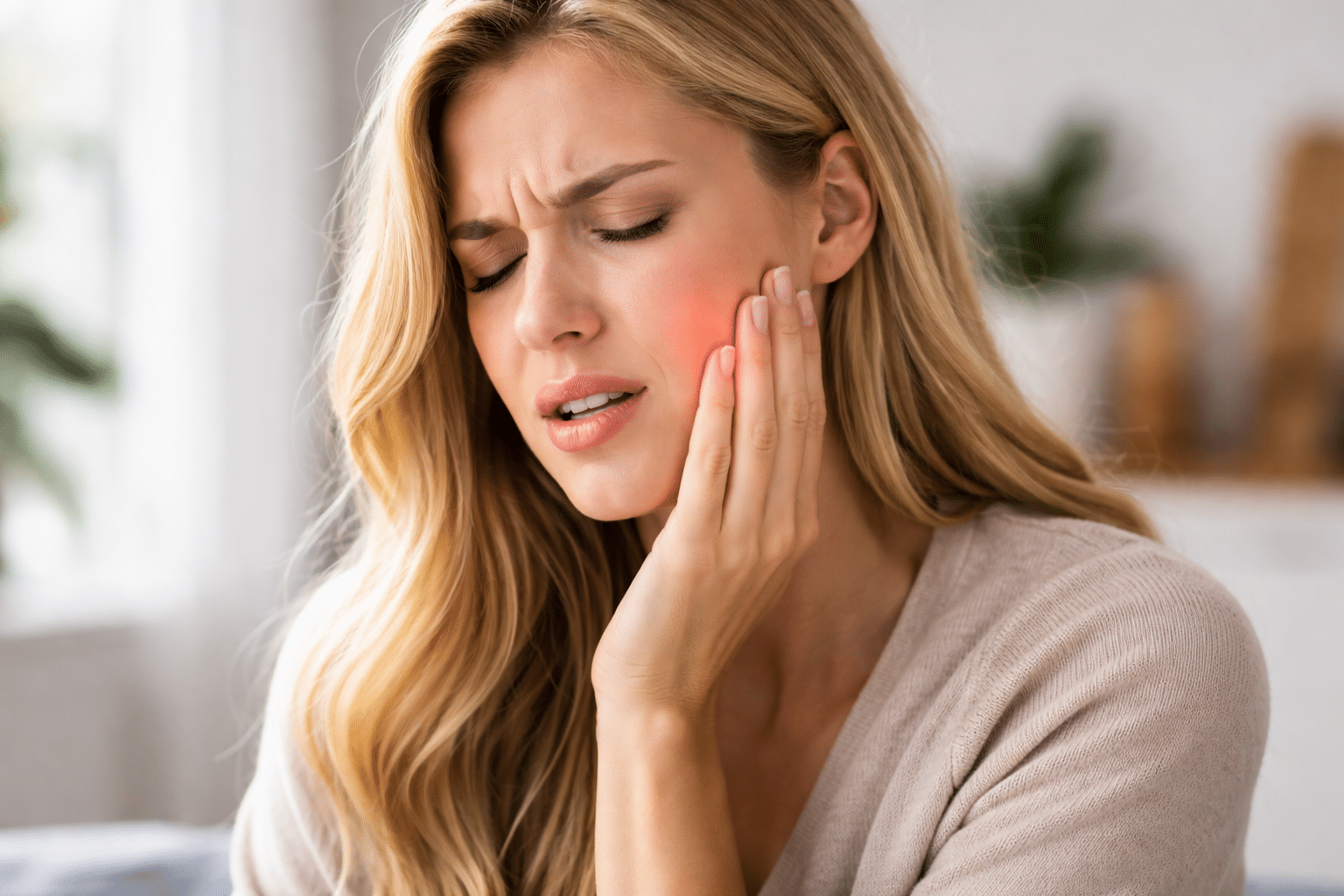
You may notice it in the cheeks, along the jawline, or near the hinges of the jaw. Some people describe the feeling as muscle fatigue, while others feel more direct pain with chewing, yawning, or opening wide.
Jaw pain does not always mean bruxism, but when it shows up alongside other symptoms like headaches, tooth sensitivity, or morning tension, the jaw becomes an important place to look.
2. Headaches, Especially at the Temples or in the Morning
Temple headaches are a classic bruxism symptom.
When the jaw muscles stay tight for long periods, especially the temporalis muscles at the sides of the head, that tension can refer pain into the temples and forehead. The result may feel like:
- a morning headache
- a tension headache
- pressure at the sides of the head
- soreness that gets worse after stressful days
Many people do not realize their jaw may be part of the headache pattern. They focus on hydration, sleep, screen time, or stress without noticing that the teeth are pressing together for hours each day.
Morning headaches can be especially important because they may suggest overnight clenching or grinding.
Can bruxism cause temple headaches?
Yes. Bruxism can cause temple headaches because tight jaw muscles, especially the temporalis muscles, can refer pain into the sides of the head. Morning headaches and tension-like headaches are common signs.
To learn more about Bruxism related headaches click here.
3. Tooth Wear, Flattening, or Chipping
Bruxism can put heavy force on the teeth over time.
This may show up as:
- flattened biting edges
- worn enamel
- small chips
- rough or shortened tooth edges
- visible changes in the shape of the teeth
Some people notice these changes themselves. Others only learn about them when a dentist points them out.
It is important to know that severe tooth wear is not required for bruxism to be present. A person can clench hard and still show limited wear, especially if clenching is more common than grinding. But visible wear is one of the clearest physical signs that the teeth have been under repeated load.
4. Tooth Sensitivity
Tooth sensitivity can be another sign of bruxism, especially when it appears along with jaw tension or tooth wear.
Grinding and clenching can irritate teeth and gradually wear down the protective enamel. As that protection thins, the teeth may become more sensitive to:
- cold drinks
- sweets
- brushing
- pressure while chewing
Sensitivity alone does not confirm bruxism. Many dental problems can cause it. But when sensitivity appears with headaches, jaw soreness, or cracked dental work, bruxism becomes more likely.
5. Tight or Tired Jaw Muscles
A tired jaw is not something most people expect to feel. But it is a common complaint in bruxism.
Some people describe it as:
- “my jaw never relaxes”
- “my face feels tense all day”
- “my cheeks feel worked out”
- “my jaw feels heavy by evening”
This kind of fatigue often happens in people with awake bruxism. The jaw stays slightly loaded through the day, especially during focus, stress, or effort. Because the pattern may not feel dramatic, people often overlook how often it is happening.
A tired jaw can be one of the earliest clues that the muscles are doing too much work.
6. Clicking, Popping, or Stiffness in the Jaw
Bruxism can place added strain on the jaw joints and the muscles that support them.
That may lead to:
- clicking
- popping
- stiffness
- limited opening
- discomfort when chewing
- a jaw that feels “off” in the morning
Not every clicking jaw means bruxism. Some joint sounds happen without pain or damage. But when clicking or stiffness appears alongside clenching, grinding, headaches, or muscle soreness, it deserves attention.
Morning stiffness can be especially useful as a clue because it suggests the jaw may have been active overnight.
7. Ear Pain, Pressure, or Fullness
Ear pain is one of the most confusing bruxism symptoms because the ear may not be the actual problem.
The jaw joint and surrounding muscles sit very close to the ear. When those tissues are tense or irritated, pain can be felt in or around the ear. Some people describe:
- aching ears
- ear pressure
- fullness
- discomfort that comes and goes
- ear symptoms with no clear infection
This is one reason people with bruxism may visit a doctor for ear symptoms before anyone considers the jaw.
Can jaw clenching cause ear pain?
Yes. Jaw clenching can cause ear pain or ear pressure because the jaw muscles and joints are located close to the ear. Tension and irritation in these tissues can create referred pain that feels like an ear problem.
To learn more about Earaches related to Bruxism click here.
8. Broken Fillings, Crowns, or Dental Work
Repeated dental damage can be an important sign of bruxism.
If you keep dealing with:
- cracked fillings
- chipped teeth
- broken crowns
- worn restorations
- repeated repair work in the same areas
the teeth may be under more force than they were designed to handle.
Sometimes dental damage shows up before the person notices much pain. A dentist may be the first one to see the pattern. Repeated breakage does not always mean bruxism, but it is one of the clearest reasons to look for excess clenching or grinding.
9. Poor Sleep or Waking Up Tense
Many people with bruxism wake up feeling like they never fully relaxed during the night.
They may notice:
- morning jaw soreness
- facial tightness
- headaches on waking
- a tired jaw
- unrestful sleep
- tension that is strongest first thing in the morning
A bed partner may sometimes hear grinding, but not always. Some people mainly clench silently.
Poor sleep does not prove sleep bruxism, and not everyone with bruxism has a sleep disorder. Still, waking up tense is an important pattern to notice, especially when it happens often.
10. Neck, Face, and Shoulder Tension
Bruxism is not always isolated to the jaw.
For many people, the jaw is part of a wider bracing pattern that includes the:
- neck
- temples
- cheeks
- upper shoulders
That tension may build during stressful days, long hours at a desk, driving, or concentrated work. The jaw tightens along with the rest of the upper body.
This broader pattern matters because it helps explain why bruxism can feel like more than a dental issue. It may be part of a larger load being carried through the muscles of the head, face, and neck.
What Bruxism Symptoms Can Be Mistaken For
Bruxism symptoms overlap with many other problems, which is why self-diagnosis can be misleading.
They may be mistaken for:
- tension headaches
- migraine
- TMJ disorders
- sinus pressure
- ear infections
- stress-related muscle tension
- dental sensitivity from other causes
- sleep-related problems
This is one reason a good dental evaluation matters. Bruxism may be the main issue, part of the issue, or one piece of a broader picture.
Do You Need Every Symptom to Have Bruxism?
No.
Some people mainly clench and feel muscle pain with very little tooth wear. Others have visible damage to the teeth but not much pain. Some people wake with headaches, while others mostly notice dental breakage or facial tightness.
Bruxism is a pattern, not a checklist you have to complete perfectly.
If several of these signs sound familiar, the jaw is worth evaluating.
Can you have bruxism without tooth wear?
Yes. You can have bruxism without obvious tooth wear, especially if you mainly clench rather than grind. Some people have jaw pain, headaches, and muscle tension before visible dental damage appears.
To learn more about Bruxism related tooth wear click here.
A Simple Self-Check for Bruxism Symptoms
Ask yourself:
- Do I wake up with jaw soreness or headaches?
- Do my teeth touch when I am not chewing or swallowing?
- Do I catch myself clenching while working, driving, or focusing?
- Do my symptoms get worse on stressful days?
- Have I chipped teeth or cracked dental work?
- Does my jaw feel tired or stiff by morning or evening?
These questions do not diagnose bruxism, but they can help you spot a pattern sooner.
When To Get Checked for Bruxism
It is a good idea to seek an evaluation if:
- symptoms keep coming back
- your jaw hurts regularly
- your headaches are frequent
- your teeth are chipping
- your dental work keeps breaking
- your jaw clicks, locks, or feels hard to open
- you wake tense or sore most mornings
- you also snore or have poor sleep
The sooner bruxism is recognized, the easier it may be to protect the teeth and reduce the ongoing strain on the muscles and joints.
What Happens During a Bruxism Evaluation?
A dentist will usually look at a combination of:
- your symptoms
- your dental history
- tooth wear
- cracks or fractures
- muscle tenderness
- jaw joint findings
- signs of clenching or grinding
- sleep and morning symptom patterns
There is not always one single test that confirms it. In many cases, dentists diagnose bruxism by recognizing a pattern across the history and exam.
To better understand Bruxism exam click here.
Why Awareness Matters So Much
One of the biggest problems with bruxism is that it often happens outside conscious awareness.
That is why awareness is often the first meaningful intervention.
If you do not realize you are clenching until your jaw already hurts, it is hard to change the pattern. But if you begin noticing it earlier, you create a chance to release the tension before it builds into pain.
This is why awareness-based strategies and biofeedback tools can be useful, especially for awake bruxism. The goal is not only to protect teeth. It is to help you recognize the habit in real time.
For example, ClenchAlert is positioned as a biofeedback training device that helps people become aware of daytime clenching so they can relax the jaw sooner. That same awareness-first idea is central to The BRUX Method by Randy Clare, which frames bruxism change around four steps:
- Build Awareness
- Relax the Response
- Understand Triggers
- eXchange the Pattern
That kind of framework can be helpful because it treats bruxism as a learned pattern that can be understood and retrained.
Final Thoughts: Do Not Ignore the Pattern
Bruxism symptoms are easy to brush off at first. A little jaw soreness. A few headaches. A chipped tooth. A feeling of tension that seems normal because it happens so often.
But these signs matter.
Jaw pain, temple headaches, tooth wear, facial tightness, cracked dental work, and waking up tense can all point to a jaw that is working too hard for too long. The sooner you recognize the pattern, the sooner you can start protecting your teeth, reducing muscle overload, and getting help that addresses more than just the damage.
If several of these symptoms sound familiar, the next step is simple: pay closer attention, track what you notice, and bring the full pattern to your dentist.
Understanding jaw pain headaches and tooth damage
FAQ: Signs and Symptoms of Bruxism
What are the most common signs of bruxism?
The most common signs of bruxism include jaw pain, morning headaches, temple tenderness, tooth wear, tooth sensitivity, facial tension, cracked dental work, jaw stiffness, and waking up with a tight or tired jaw.
Can bruxism cause headaches every day?
It can. Bruxism may contribute to recurring headaches, especially temple headaches or morning headaches, when the jaw muscles stay tight for long periods.
Does jaw clenching cause ear pain?
Yes. Jaw clenching can cause ear pain or pressure because the jaw muscles and joints are located close to the ear and can refer pain into that area.
Can you have bruxism without grinding at night?
Yes. Many people mainly clench during the day or at night without obvious grinding sounds.
Is tooth sensitivity a sign of bruxism?
It can be. Bruxism may wear down enamel and increase tooth sensitivity, especially when it appears with other symptoms like jaw pain or tooth wear.
Can bruxism cause neck and shoulder tension?
Yes. For some people, bruxism is part of a wider bracing pattern that includes the jaw, neck, face, and shoulders.
Why do I wake up with jaw pain?
Waking with jaw pain may be a sign of sleep bruxism, overnight clenching, or a jaw that stayed tense during sleep.
Can bruxism break fillings or crowns?
Yes. Repeated grinding and clenching can place enough force on the teeth to crack fillings, damage crowns, and chip teeth.
What does jaw clenching feel like?
Jaw clenching may feel like tightness, pressure, heaviness, fatigue, soreness, or a jaw that never fully relaxes.
When should I get checked for bruxism?
You should get checked if symptoms are recurring, your jaw hurts often, your teeth or dental work are breaking, or you wake up with regular tension or headaches.

Randy Clare is a writer, educator, and health communicator focused on making complex clinical topics easier to understand. He is the author of The Brux Method, host of The Clenching Chronicle Podcast, and a contributor to ClenchAlert. He previously served as Director of Digital Marketing at Glidewell Dental, is President of Hawkeye Group, and co-founded the American Sleep and Breathing Academy.