

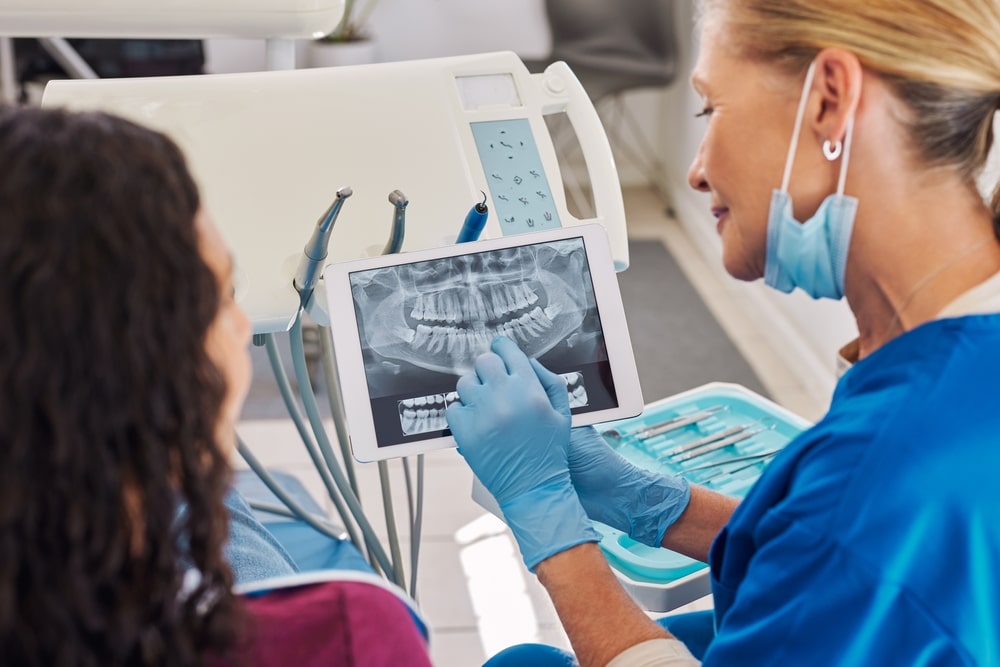
If you think you may be clenching or grinding your teeth, you may wonder how a dentist would know.
Medically responsible content note:
This article is for education only and does not diagnose or treat medical, dental, or sleep conditions. Bruxism, jaw pain, headaches, snoring, breathing pauses, and respiratory symptoms can have multiple causes. Seek care from a qualified medical, dental, sleep, or orofacial pain professional when symptoms are persistent, worsening, severe, or disruptive.
The answer is that dentists usually do not diagnose bruxism from one single test. They diagnose it by looking at a pattern. That pattern includes what you feel, what you notice at home, what your teeth and jaw look like, and what shows up during the clinical exam.
That matters because bruxism is not always obvious. Some people have clear tooth wear but very little pain. Others have major jaw soreness, headaches, and facial tension with almost no visible wear at all. Some grind loudly enough for a bed partner to hear. Others mostly clench silently and do not realize how often it happens.
A good bruxism evaluation helps connect those dots.
In this guide, you will learn how dentists diagnose bruxism, what they look for during the exam, how they think about clenching versus grinding, and what happens after a diagnosis is made.
Can a Dentist Tell If You Have Bruxism?
Often, yes.
In many cases, a dentist can recognize bruxism by combining your symptoms, dental history, and exam findings. The diagnosis is usually clinical, which means it is based on the overall pattern rather than one perfect test result.
A dentist may suspect bruxism if you report things like:
- jaw pain
- morning headaches
- tooth sensitivity
- facial tension
- chipped teeth
- cracked fillings
- waking up sore
- clenching during the day
- a partner hearing grinding at night
They will then compare those symptoms with what they see in your teeth, muscles, jaw joints, and dental work.
Can a dentist tell if you have bruxism?
Yes. Dentists often diagnose bruxism by looking at symptoms, dental history, tooth wear, muscle tenderness, jaw stiffness, and damage to teeth or dental work. It is usually a clinical diagnosis based on a pattern of signs and symptoms.
How Bruxism Is Usually Diagnosed
Bruxism is often diagnosed through a combination of:
- your symptom history
- your dental history
- a clinical exam
- signs of tooth wear
- cracks or fractures
- jaw muscle tenderness
- jaw joint findings
- reports of grinding or waking with tension
This is important because bruxism can show up in different ways. There is not always one single feature that proves it. Instead, dentists look for multiple clues that point in the same direction.
For example, a patient may report temple headaches, morning jaw soreness, and cracked fillings. On exam, the dentist may find worn tooth edges and tenderness in the jaw muscles. Together, those signs make the diagnosis much clearer than any one sign alone.
To learn more about how bruxism is usually diagnosed click here
The First Step: Your Symptom History
A bruxism evaluation usually begins with your symptoms.
What you describe matters because the pattern often starts with what you feel before it becomes obvious on the teeth.
A dentist may ask about:
- jaw soreness
- facial fatigue
- headaches, especially in the morning or at the temples
- tooth sensitivity
- ear pressure or ear pain
- stiffness when opening wide
- pain with chewing
- sleep quality
- waking up tense
- dental breakage
- clenching during work, driving, or stress
This history helps the dentist understand when the symptoms happen, how often they happen, and whether they suggest awake bruxism, sleep bruxism, or both.
Questions Dentists Ask When They Suspect Bruxism
During the visit, your dentist may ask questions such as:
- Do you wake up with jaw pain or tightness?
- Do you get headaches at the temples?
- Do you catch yourself clenching during the day?
- Has anyone heard you grind your teeth at night?
- Do your teeth feel sensitive?
- Have you chipped teeth or broken dental work?
- Does your jaw click, pop, or feel stiff?
- Do symptoms get worse during stress or long workdays?
- Do you snore or wake up tired?
These questions are not random. Each one helps build the diagnostic picture.
For example, morning symptoms may point more toward sleep bruxism, while daytime clenching during work may suggest awake bruxism. Repeated breakage of fillings or crowns may point to excessive bite force even if the patient has not noticed much pain.
What Dentists Look For During a Bruxism Exam
Once your history is clear, the dentist will look for physical signs of jaw overload.
1. Tooth Wear Patterns
One of the most recognized signs of bruxism is tooth wear.
A dentist may look for:
- flattened biting edges
- polished wear facets
- shortening of the teeth
- worn enamel
- exposed dentin in more advanced cases
- matching wear patterns on opposite teeth
These signs can suggest repeated grinding over time. Still, tooth wear alone does not tell the whole story. Some people wear their teeth slowly for other reasons. Others clench heavily without much visible wear.
That is why wear patterns are important, but not enough by themselves.
Featured snippet answer: What do dentists look for to diagnose bruxism?
Dentists look for tooth wear, chipped teeth, broken dental work, jaw muscle tenderness, jaw stiffness, clicking, and a history of clenching, grinding, headaches, or morning soreness.
For more information about what a dentist is looking for click here
2. Cracks, Chips, and Broken Dental Work
Bruxism often shows up in the damage it leaves behind.
Dentists look for:
- chipped enamel
- cracked teeth
- fractured fillings
- loosened or worn restorations
- crowns that break or fail repeatedly
- recurring dental damage in the same areas
This matters because repeated breakage can be one of the clearest signs that the teeth are under more force than they should be.
Sometimes patients are surprised to learn that damaged dental work may be connected to clenching. They may think a crown simply “went bad” when the real issue is repeated overload.
3. Jaw Muscle Tenderness
Bruxism is not just about the teeth. It is also about the muscles doing the work.
Dentists often check the major jaw muscles, especially the:
- masseter muscles in the cheeks
- temporalis muscles at the sides of the head
They may gently press on these muscles to see whether they feel tender, tight, enlarged, or overworked.
Pain in these muscles can support the diagnosis, especially when it matches the patient’s symptoms.
For example:
- sore cheeks may point to masseter overload
- temple pain may point to temporalis involvement
- facial fatigue may suggest repeated daytime clenching
4. Jaw Joint Findings
The dentist may also examine the jaw joints for signs of strain.
They may look for:
- clicking
- popping
- stiffness
- limited opening
- deviation during opening
- pain with movement
- tenderness near the joint
Not every joint sound means bruxism. Some people have clicking without pain or damage. But when joint symptoms appear alongside clenching, grinding, headaches, or muscle tension, they become part of the larger pattern.
5. Soft Tissue Clues
Dentists may also look at the soft tissues inside the mouth for signs of parafunctional habits.
These signs can include:
- cheek biting
- ridging or irritation along the cheeks
- scalloping along the tongue in some cases
- signs of repeated pressure or friction
These findings do not diagnose bruxism on their own, but they can add support when combined with symptoms and other exam findings.
Understanding bruxism symptoms
Why Bruxism Is Not Always Easy to Diagnose
Bruxism can be surprisingly inconsistent from one person to another.
Some people have:
- severe headaches with little tooth wear
- heavy tooth wear with very little pain
- clear daytime clenching but no nighttime symptoms
- morning jaw soreness without a partner ever hearing grinding
- repeated dental breakage without obvious facial pain
That is why a dentist does not rely on one clue alone.
Bruxism is usually a pattern-based diagnosis. The more consistent the pattern is across symptoms, history, and exam findings, the more confident the dentist can be.
Awake Bruxism vs Sleep Bruxism in Diagnosis
One goal of the evaluation is to understand when the jaw is being overloaded.
How Awake Bruxism Is Recognized
Awake bruxism is often recognized through:
- self-reported clenching
- jaw tightening during stress or concentration
- facial fatigue at the end of the day
- noticing the teeth touching when not chewing
- headaches that worsen after work or mental effort
Many people with awake bruxism do not realize how often they do it until they begin paying attention.
How Sleep Bruxism Is Recognized
Sleep bruxism is more often recognized through:
- morning jaw soreness
- morning headaches
- waking with facial tension
- tooth wear
- reports of grinding from a bed partner
- dental damage that suggests overnight loading
- poor sleep or waking unrefreshed
Dentists use this timing information to understand whether symptoms are mostly happening during the day, during sleep, or across both.
Featured snippet answer: How do dentists tell the difference between clenching and grinding?
Dentists tell the difference by looking at symptoms, timing, tooth wear, and patient history. Grinding usually causes more movement-related wear, while clenching often causes muscle pain, jaw tightness, and pressure without as much visible wear.
Do You Need a Special Test to Diagnose Bruxism?
Usually not.
Most cases of bruxism are diagnosed through history and clinical exam rather than through a special standalone test.
That said, additional tools may sometimes be used to understand related problems, such as:
- dental photographs
- bite records
- monitoring wear over time
- imaging for tooth or joint concerns
- referral for sleep-related evaluation when indicated
These tools may help clarify the full picture, but the diagnosis itself is still usually based on clinical pattern recognition.
Will X-Rays Show Bruxism?
Not directly.
X-rays can help identify certain dental or jaw issues, but they do not diagnose bruxism by themselves. A dentist may use imaging to look for related problems, such as:
- cracks
- tooth damage
- bone changes
- other dental concerns
But the key diagnosis still comes from the combination of symptoms, wear patterns, muscle findings, and history.
Featured snippet answer: Will an X-ray show bruxism?
No. X-rays do not directly diagnose bruxism. Dentists usually diagnose bruxism through symptoms, tooth wear, muscle tenderness, dental damage, and clinical examination.
Do You Need a Sleep Study for Bruxism?
Not always.
A sleep study is not required for every bruxism case. But it may be relevant when the patient also has symptoms such as:
- loud snoring
- gasping during sleep
- excessive daytime sleepiness
- frequent awakenings
- poor-quality sleep
- strong morning symptoms that suggest sleep-related involvement
This does not mean every person with bruxism has sleep apnea or another sleep disorder. It means that sleep-related clues should not be ignored when they are part of the pattern.
What a Bruxism Diagnosis Really Means
A diagnosis of bruxism means there is evidence that the jaw is being repeatedly overloaded through clenching, grinding, or bracing.
It is not just a label. It is a starting point.
Once the pattern is identified, the dentist can begin to think about:
- protecting the teeth
- reducing muscle strain
- managing pain
- identifying triggers
- improving awareness
- addressing sleep-related concerns if needed
That is what makes the diagnosis useful. It turns a vague group of symptoms into a pattern that can be addressed more directly.
For more info on what a Bruxism diagnosis really means click here
What Happens After a Bruxism Diagnosis?
The next steps depend on what the dentist finds and what symptoms are most important.
Possible recommendations may include:
Tooth Protection
If the teeth are being damaged, the dentist may recommend a protective appliance when appropriate. This can help reduce wear and protect restorations.
Symptom Monitoring
The dentist may ask you to track:
- morning symptoms
- daytime clenching
- headaches
- jaw soreness
- times when the jaw feels most tense
Tracking can help reveal whether the pattern is more related to sleep, daytime stress, or both.
Understand how Bruxism affects your jaw, head and teeth
Awareness and Behavior Change
For many people, especially those with awake bruxism, awareness is one of the most important next steps.
If you can catch the pattern earlier, you have a better chance of releasing the jaw before the symptoms build.
This is where biofeedback may fit into the conversation. For example, ClenchAlert is designed as a biofeedback training device to help people notice daytime clenching sooner, rather than simply protecting the teeth after the fact.
This same awareness-first approach is also reflected in The BRUX Method by Randy Clare, which frames change around four steps:
- Build Awareness
- Relax the Response
- Understand Triggers
- eXchange the Pattern
That kind of framework can be helpful because it treats bruxism as a pattern that can be understood and retrained.
Sleep Evaluation When Needed
If snoring, poor sleep, or strong morning symptoms are part of the picture, the dentist may recommend further medical evaluation or collaboration with a sleep-focused provider.
Why Early Diagnosis Matters
Bruxism is often easier to manage when it is recognized early.
Early diagnosis may help:
- reduce tooth wear
- prevent repeated breakage of dental work
- address headaches and facial pain sooner
- reduce ongoing strain on the jaw muscles and joints
- reveal sleep-related or habit-related contributors before the pattern becomes more entrenched
Waiting until the teeth are badly damaged or the pain becomes chronic usually makes the process harder.
How To Prepare for a Bruxism Exam
If you think you may have bruxism, a little preparation can make the visit more useful.
Before the appointment, try to notice:
- when your jaw feels sore
- whether you wake with headaches
- whether you clench during work, stress, or driving
- whether your teeth feel sensitive
- whether you are chipping teeth or breaking dental work
- whether you snore, wake up tired, or feel especially tense in the morning
Even a short symptom log can help the dentist see the pattern more clearly.
Final Thoughts: Diagnosis Is the Start of the Solution
Dentists diagnose bruxism by looking for a pattern. They listen to your symptoms, examine your teeth and jaw, check for muscle tenderness and dental damage, and look for clues that point to clenching, grinding, or repeated jaw bracing.
That means your experience matters. What you feel is part of the diagnosis.
If your jaw hurts, your headaches keep returning, your teeth are chipping, or you wake up tense and sore, it is worth getting checked. The earlier the pattern is recognized, the sooner you can start protecting your teeth, reducing muscle overload, and building a plan that addresses the real problem.
FAQ: How Dentists Diagnose Bruxism
How do dentists diagnose bruxism?
Dentists usually diagnose bruxism through symptoms, dental history, and a clinical exam. They look for tooth wear, muscle tenderness, jaw stiffness, broken dental work, and signs of clenching or grinding.
Can a dentist tell if you clench your jaw?
Often, yes. A dentist may suspect jaw clenching based on muscle tenderness, dental damage, jaw tightness, and your description of daytime or nighttime symptoms.
What are the signs dentists look for in bruxism?
Dentists look for flattened teeth, chipped enamel, cracked fillings, sore jaw muscles, jaw stiffness, facial tension, and a history of headaches or morning soreness.
Do you need a sleep study to diagnose bruxism?
Not always. Most bruxism cases are diagnosed through history and clinical exam. A sleep study may be considered if there are signs of sleep-related problems like snoring or waking up unrefreshed.
Can you have bruxism without worn teeth?
Yes. Some people mainly clench rather than grind, so they may have jaw pain, headaches, and muscle tension before obvious tooth wear appears.
Will an X-ray show bruxism?
No. X-rays do not directly diagnose bruxism. They may help evaluate related dental problems, but the diagnosis usually comes from symptoms and exam findings.
Can dentists tell the difference between clenching and grinding?
Often, yes. Grinding usually creates more tooth wear from movement, while clenching often causes muscle pain, tightness, and pressure with less visible wear.
What happens during a bruxism exam?
A dentist will usually review your symptoms, ask about headaches and jaw pain, look for tooth wear or broken dental work, examine the jaw muscles and joints, and assess the overall pattern.
When should you see a dentist for jaw clenching?
You should get checked if your jaw hurts often, you wake up sore, you are getting frequent headaches, or your teeth or dental work are being damaged.
What happens after a bruxism diagnosis?
Next steps may include tooth protection, symptom tracking, awareness training, biofeedback, stress or habit support, and sleep evaluation when needed.

Randy Clare is a writer, educator, and health communicator focused on making complex clinical topics easier to understand. He is the author of The Brux Method, host of The Clenching Chronicle Podcast, and a contributor to ClenchAlert. He previously served as Director of Digital Marketing at Glidewell Dental, is President of Hawkeye Group, and co-founded the American Sleep and Breathing Academy.