

Quick Answer
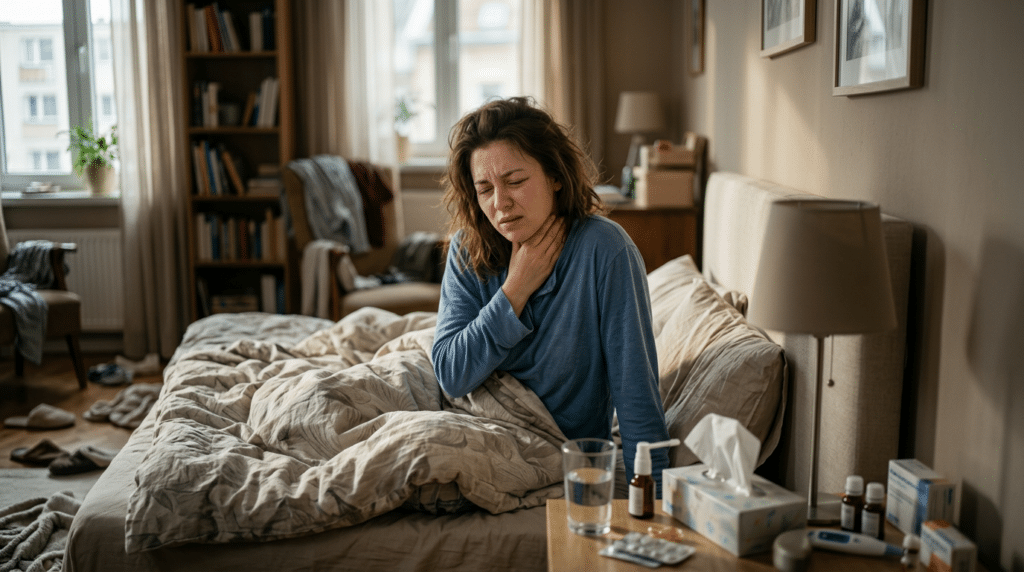
Snoring with dry mouth and morning headaches does not automatically mean sleep apnea. This pattern can also come from mouth breathing, nasal congestion, allergies, dry bedroom air, alcohol, reflux, medication effects, dehydration, jaw tension, or sleeping on your back.
Medically responsible content note:
This article is for education only and does not diagnose or treat medical, dental, or sleep conditions. Bruxism, jaw pain, headaches, snoring, breathing pauses, and respiratory symptoms can have multiple causes. Seek care from a qualified medical, dental, sleep, or orofacial pain professional when symptoms are persistent, worsening, severe, or disruptive.
However, the pattern matters more when it happens often or appears with gasping, choking, witnessed pauses in breathing, daytime sleepiness, brain fog, high blood pressure, or waking up unrefreshed. If snoring, dry mouth, and morning headaches keep showing up together, track the pattern and ask a qualified medical or sleep professional whether sleep testing makes sense.
If obstructive sleep apnea or problem snoring is confirmed, oral appliance therapy may be one treatment option to discuss. The American Academy of Dental Sleep Medicine describes oral appliance therapy as a treatment option for snoring and obstructive sleep apnea when prescribed by a physician and provided by a qualified dentist.
Seek prompt medical care if you wake with chest pain, severe shortness of breath, fainting, new neurologic symptoms, or a sudden severe headache.
Not sure whether your symptoms are random or connected? Use the 7-Day Sleep and Symptom Tracker to record snoring, dry mouth, morning headaches, congestion, sleep position, and daytime tiredness.
Snoring With Dry Mouth and Morning Headaches: Why the Pattern Matters
If you snore and wake up with dry mouth and morning headaches, it is reasonable to wonder whether your breathing during sleep is part of the problem.
The answer is not always sleep apnea. Many everyday factors can contribute to this pattern. Your nose may be congested. Your mouth may fall open during sleep. The bedroom air may be dry. Alcohol, reflux, medication effects, jaw tension, or sleep position may also play a role.
Still, the combination deserves attention when it becomes frequent.
Snoring can happen when airflow vibrates through relaxed or narrowed tissues in the upper airway. Dry mouth may happen when the mouth stays open during sleep. Morning headaches can come from poor sleep quality, disrupted breathing, dehydration, jaw tension, medication effects, or other causes.
The concern behind snoring, dry mouth, and morning headaches is usually whether the symptoms are connected or just happening separately. That is why tracking matters.
If dry mouth is your main concern, start with this guide to waking up with dry mouth.
How These Symptoms Can Fit Together
Snoring, dry mouth, and morning headaches can overlap in different ways. The pattern gives you clues, but it does not prove one single cause.
How These Symptoms Can Fit Together
Snoring, dry mouth, and morning headaches can overlap in different ways. The pattern gives you clues, but it does not prove one single cause.
Snoring plus dry mouth
Mouth breathing, nasal congestion, dry air, or airway narrowing may be involved.
Snoring plus morning headaches
Poor sleep quality, sleep-disordered breathing risk, bruxism, dehydration, or tension may be involved.
Snoring plus gasping or witnessed pauses
This is a stronger reason to ask about sleep apnea screening or sleep testing.
Dry mouth worse during allergy season
Nasal congestion or mouth breathing may be contributing.
Symptoms worse after alcohol
Alcohol may be worsening snoring, sleep quality, or airway relaxation.
Symptoms worse on your back
Sleep position may be part of the pattern.
Morning headache plus jaw soreness
Bruxism, clenching, or jaw muscle tension may also be involved.
One dry-mouth morning may not mean much. A repeated pattern of snoring, dry mouth, morning headaches, and daytime sleepiness deserves a closer look.
Why Snoring and Dry Mouth Often Show Up Together
Snoring and dry mouth often overlap because of mouth breathing.
When nasal airflow is limited, some people breathe through the mouth during sleep. If the mouth stays open for long periods, saliva can evaporate. By morning, the mouth, throat, or lips may feel dry.
You may notice:
- Dry mouth when you wake up
- Sore throat in the morning
- Bad breath
- Cracked lips
- A sticky feeling in the mouth
- More thirst at the bedside
- Snoring that gets worse during congestion
Mouth breathing can be temporary. A cold, seasonal allergies, or a dry bedroom may be enough to trigger it. But if it happens most nights, it may be part of a larger sleep-breathing pattern.
For the bigger picture, read this guide to breathing during sleep.
Why Morning Headaches Can Be Part of the Pattern
Morning headaches are common, but they are not all the same.
Some are related to tension, migraine, dehydration, caffeine changes, medication effects, jaw clenching, poor sleep, or sleep-disordered breathing. That is why morning headaches should be interpreted in context.
A morning headache deserves more attention when it appears with:
- Loud snoring
- Dry mouth
- Waking unrefreshed
- Daytime sleepiness
- Brain fog
- Gasping or choking at night
- A bed partner noticing pauses in breathing
Sleep apnea symptom lists commonly include loud snoring, gasping during sleep, waking with dry mouth, morning headaches, trouble staying asleep, daytime sleepiness, and trouble paying attention. That does not mean every morning headache is sleep apnea. It means morning headaches become more meaningful when they appear alongside other sleep-breathing symptoms.
If headaches are your main concern, this guide to morning headaches explains how sleep apnea, bruxism, and other causes can overlap.
Common Reasons This Pattern Happens
Snoring with dry mouth and morning headaches can have several causes. Some are simple. Others need professional evaluation.
Mouth Breathing During Sleep
Mouth breathing is one of the most common reasons people wake up with dry mouth.
If your lips part during sleep, air moves across the mouth and throat. That can leave the mouth feeling dry by morning. Mouth breathing may also contribute to throat irritation and louder snoring.
Common clues include waking with dry mouth, needing water at night, sore throat on waking, or noticing that symptoms are worse when your nose is congested.
Nasal Congestion or Allergies
A blocked nose can push breathing through the mouth.
Congestion may come from allergies, sinus issues, colds, chronic rhinitis, dust, pet dander, mold, or bedroom air quality. When nasal airflow is reduced, snoring may become louder and dry mouth may be more noticeable.
Ask yourself:
- Was my nose blocked before bed?
- Did I wake up congested?
- Are symptoms worse during allergy season?
- Do symptoms improve when my nasal breathing is better?
If congestion is a frequent issue, this article on nasal congestion and sleep can help you think through the connection.
Dry Bedroom Air
Dry air can make the mouth and throat feel worse in the morning.
This may happen during winter, with forced-air heat, with air conditioning, or in a room with low humidity. Dry bedroom air may not cause snoring by itself, but it can amplify morning dryness and throat irritation.
If dry mouth is worse during certain seasons or in certain rooms, bedroom air may be part of the pattern.
Alcohol Before Bed
Alcohol can worsen snoring for some people.
It may relax muscles around the upper airway and make breathing more unstable during sleep. It can also fragment sleep and contribute to dehydration. The result may be louder snoring, more mouth dryness, and a rougher morning.
Tracking alcohol timing can help. Pay attention to whether snoring, dry mouth, or morning headaches are worse after drinking within a few hours of bedtime.
Medication Effects
Some medications can contribute to dry mouth, sleepiness, or changes in sleep quality.
These may include certain allergy medicines, antidepressants, blood pressure medicines, pain medicines, muscle relaxants, and sleep aids. Medication effects vary by person.
Do not stop or change medication on your own. If dry mouth, morning headaches, snoring, or daytime sleepiness changed after starting a medication, discuss it with your clinician or pharmacist.
Sleeping on Your Back
Back sleeping can make snoring worse in some people.
When you sleep on your back, gravity can allow the tongue and soft tissues to fall backward. This may narrow the airway and increase vibration. Some people only snore heavily in this position.
If your symptoms are worse on your back and better on your side, that is useful information to bring to a sleep professional.
Reflux or Late Meals
Reflux can irritate the throat and disturb sleep.
Some people wake with throat burning, sour taste, coughing, hoarseness, or a dry feeling in the mouth. Late meals, alcohol, and lying flat soon after eating may worsen reflux symptoms.
Reflux does not explain every snoring pattern. Still, it can overlap with nighttime coughing, throat irritation, and poor sleep.
Jaw Clenching or Bruxism
Morning headaches can also overlap with jaw tension.
Some people clench or grind during sleep. Others carry jaw tension during the day and wake with sore jaw muscles, temple pressure, tooth soreness, or facial fatigue. Jaw clenching does not explain dry mouth or snoring by itself, but it can be part of a mixed morning symptom pattern.
If you wake with headaches and jaw soreness, this guide to jaw clenching and headaches may help you compare the patterns.
Sleep Apnea Risk
Snoring with dry mouth and morning headaches can also appear in obstructive sleep apnea.
Obstructive sleep apnea happens when the upper airway repeatedly narrows or closes during sleep. This can disrupt sleep and breathing. Common symptoms may include loud snoring, witnessed pauses, gasping, morning dry mouth, morning headaches, daytime sleepiness, and trouble focusing.
Snoring alone does not prove sleep apnea. But snoring plus dry mouth, morning headaches, gasping, witnessed pauses, and daytime symptoms should not be ignored.
What You Can Check Tonight
You do not need to solve the whole problem tonight. Start by gathering better information.
Breathing clues
- Does your nose feel blocked before bed?
- Are allergies, congestion, or sinus symptoms present?
- Does a bed partner notice loud snoring, gasping, choking, or pauses?
- Do you wake up unrefreshed even after enough time in bed?
Environment clues
- Is your room very dry?
- Are symptoms worse during winter, allergy season, or in a specific bedroom?
- Are you waking with a sore throat, sticky mouth, or cracked lips?
Pattern clues
- Did you drink alcohol within a few hours of bedtime?
- Did you eat late or notice reflux symptoms?
- Are you sleeping mostly on your back?
- Do you feel sleepy, foggy, or headachy the next day?
These checks are not treatments. They are observations. The more clearly you can describe the pattern, the more useful your next conversation with a clinician can be.
When the Pattern Matters More
Pay closer attention if you notice:
- Loud snoring most nights
- Snoring that disrupts a bed partner
- Dry mouth most mornings
- Morning headaches several days per week
- Waking up gasping, choking, or short of breath
- Witnessed pauses in breathing
- Restless sleep
- Waking unrefreshed
- Daytime sleepiness
- Brain fog or poor concentration
- Irritability or mood changes
- High blood pressure
- Symptoms that are getting worse over time
The more of these symptoms you notice together, the more important it becomes to ask whether sleep breathing should be evaluated.
What to Track for 7 Nights
A simple 7-night log can make your next conversation more useful.
Track these items each morning:
- Did I snore?
- Was snoring mild, moderate, loud, or disruptive?
- Did I wake with dry mouth?
- Did I wake with a sore throat?
- Did I have a morning headache?
- Where was the headache?
- How severe was it?
- How long did it last?
- Did I wake up gasping or choking?
- Did anyone notice pauses in my breathing?
- Did I sleep mostly on my back, side, or stomach?
- Was my nose congested?
- Did I drink alcohol within a few hours of bed?
- Did I eat late or notice reflux?
- Did I feel sleepy, foggy, or unrefreshed during the day?
- Did I wake with jaw pain or tooth soreness?
A 7-night symptom tracker can help you bring clearer information to your doctor, dentist, or sleep professional. Instead of saying, “I think I sleep badly,” you can say, “For the last week, I snored loudly, woke with dry mouth six mornings, had headaches four mornings, and felt sleepy during the day.”
That is much more useful than guesswork.
Download the 7-Day Sleep and Symptom Tracker before your next appointment. Use it to record snoring, dry mouth, morning headaches, congestion, sleep position, and daytime sleepiness.
When to Ask About a Sleep Study
You should consider asking about sleep testing if snoring, dry mouth, and morning headaches happen repeatedly or appear with other warning signs.
Ask about testing if:
- Your snoring is loud or frequent
- A bed partner notices pauses in breathing
- You wake up gasping or choking
- You wake with dry mouth most mornings
- You often wake with morning headaches
- You feel sleepy during the day
- You wake unrefreshed despite enough time in bed
- You have brain fog or trouble concentrating
- You have high blood pressure
- Your symptoms are getting worse
A sleep study is a test used to evaluate sleep and breathing during sleep. An in-lab sleep study, also called polysomnography, can record breathing, oxygen level, heart rate, brain waves, and body movements during sleep. In some cases, a home sleep apnea test may be used when obstructive sleep apnea is suspected and the situation is appropriate.
Your clinician can help decide which type of testing fits your symptoms and health history.
For more detail, read about the signs you may need a sleep study.
If Sleep Apnea or Problem Snoring Is Confirmed, Oral Appliance Therapy May Be an Option
If testing shows obstructive sleep apnea, or if a clinician determines that snoring should be treated, the next question is usually: what treatment pathway fits this person?
CPAP is a common treatment for obstructive sleep apnea. For some people, oral appliance therapy may also be appropriate. This is especially relevant for patients with primary snoring, mild to moderate obstructive sleep apnea, or difficulty tolerating CPAP. The exact decision should be made by the treating physician and sleep dentist based on diagnosis, severity, anatomy, symptoms, medical history, and patient preference.
The American Academy of Dental Sleep Medicine describes oral appliance therapy as a treatment option for snoring and obstructive sleep apnea. A custom oral appliance fits over the teeth during sleep and supports the jaw in a forward position to help keep the airway open.
This is where a qualified dentist can play an important role. The dentist does not diagnose sleep apnea from snoring alone. Instead, the dentist helps provide and manage the oral appliance after the appropriate medical diagnosis and prescription pathway.
A strong oral appliance therapy pathway usually includes:
- A sleep evaluation or diagnosis when sleep apnea is suspected
- A physician’s prescription when oral appliance therapy is selected
- A custom-fitted appliance made by a qualified dentist
- Careful adjustment or titration over time
- Follow-up with the dentist to monitor comfort, fit, side effects, and bite changes
- Follow-up sleep testing when needed to confirm treatment effectiveness
- Ongoing communication between the sleep physician and dental sleep provider
This matters because a custom oral appliance is not just a “snore guard.” A well-managed oral appliance is part of a dental sleep medicine treatment process.
Why Custom Oral Appliances Are Different From Generic Mouthpieces
Over-the-counter mouthpieces may look similar to custom dental sleep appliances, but they are not the same as dentist-managed oral appliance therapy.
A custom oral appliance is made for the patient’s teeth, jaw position, comfort needs, and treatment goals. It should be adjusted over time and monitored for fit, comfort, symptom response, jaw symptoms, and bite changes.
Generic mouthpieces may reduce snoring for some people, but they are not a substitute for sleep testing when sleep apnea is suspected. They also do not replace care from a physician or qualified dentist.
If your symptoms suggest possible sleep apnea, do not try to solve the pattern with a store-bought mouthpiece first. Ask about proper evaluation. If oral appliance therapy is appropriate, work with a qualified provider who can select, fit, adjust, and monitor the appliance.
Where Dentists May Fit In
Dentists may notice signs that overlap with sleep and breathing concerns.
These may include tooth wear, jaw muscle tenderness, morning jaw pain, dry mouth patterns, scalloped tongue, or signs that a patient may be clenching or grinding. A dentist cannot diagnose sleep apnea from tooth wear or snoring alone. However, dental findings can be part of the larger conversation.
A dentist trained in dental sleep medicine may help screen for sleep-related breathing concerns, refer for medical evaluation, and provide oral appliance therapy when it is prescribed. This makes the dental office an important access point for people who snore, wake with dry mouth, or notice morning symptoms but have not yet had a sleep evaluation.
If oral appliance therapy is used, follow-up matters. The appliance may need adjustment. Symptoms should be reassessed. Comfort and fit should be monitored. Bite changes and jaw symptoms should be watched over time. In many cases, follow-up sleep testing may be recommended to confirm that the appliance is working as intended.
What This Pattern Does Not Prove
Snoring with dry mouth and morning headaches is a clue. It is not a diagnosis.
It does not prove that you have sleep apnea. It does not prove that your airway is blocked. It does not prove that your headache is coming from sleep breathing.
Other possible contributors include:
- Nasal allergies
- Sinus congestion
- Dry air
- Dehydration
- Medication side effects
- Alcohol
- Reflux
- Migraine
- Tension-type headache
- Jaw clenching or bruxism
- Poor sleep schedule
- Stress
- Caffeine changes
The value is in noticing whether the same symptoms keep showing up together.
Questions to Ask Your Doctor, Dentist, or Sleep Professional
Bring specific questions to your appointment.
You might ask:
- Could my snoring, dry mouth, and morning headaches be related?
- Should I be screened for obstructive sleep apnea?
- Would a home sleep apnea test or lab sleep study make sense?
- Could nasal congestion or allergies be contributing?
- Could alcohol, medication, or reflux be making this worse?
- Should my dentist check for signs of clenching, tooth wear, or jaw muscle tension?
- If sleep apnea or problem snoring is confirmed, am I a candidate for oral appliance therapy?
- Would a custom oral appliance be appropriate in my case?
- What are the pros and cons of CPAP compared with oral appliance therapy for my situation?
- How would we confirm that an oral appliance is working?
- What should I track before my next visit?
These questions help keep the conversation focused and practical.
Key Takeaway
Snoring with dry mouth and morning headaches can happen for many reasons. Mouth breathing, nasal congestion, dry bedroom air, alcohol, medication effects, reflux, sleep position, jaw tension, and sleep apnea risk can all play a role.
The pattern matters most when it happens often, gets worse, or appears with gasping, choking, witnessed pauses, daytime sleepiness, brain fog, high blood pressure, or waking unrefreshed.
Track the symptoms for a week. Then ask a qualified professional whether sleep testing or another evaluation makes sense.
If obstructive sleep apnea or problem snoring is confirmed, oral appliance therapy may be one treatment path to discuss. For the right patient, a custom oral appliance made and managed by a qualified dentist can be a serious treatment option. The best appliance is the one that fits the diagnosis, the patient, and the follow-up plan.
Bring your completed tracker to your doctor, dentist, or sleep professional so the conversation starts with a clear pattern, not guesswork.
Frequently Asked Questions
Why do I snore and wake up with dry mouth and a headache?
You may be mouth breathing during sleep, especially if your nose is congested or your bedroom air is dry. Alcohol, reflux, medication effects, sleeping on your back, jaw tension, and poor sleep quality may also contribute. If this pattern happens often, track it and ask a qualified professional whether sleep breathing should be evaluated.
Does snoring with dry mouth and morning headaches mean sleep apnea?
Not always. Snoring, dry mouth, and morning headaches can have several causes. However, when they appear with gasping, choking, witnessed pauses, daytime sleepiness, brain fog, high blood pressure, or waking unrefreshed, it is reasonable to ask whether sleep testing is appropriate.
Can mouth breathing cause dry mouth and morning headaches?
Mouth breathing can cause or worsen dry mouth because air moves across the mouth and throat during sleep. Morning headaches may come from several causes, including poor sleep quality, jaw tension, dehydration, or sleep-disordered breathing. The combination is worth tracking.
Can allergies make snoring and dry mouth worse?
Yes. Allergies can block nasal airflow and push breathing through the mouth during sleep. That may worsen snoring, dry mouth, sore throat, and morning discomfort.
When should I ask about a sleep study for snoring?
Ask about a sleep study if your snoring is loud, frequent, or worsening, especially if you also wake with dry mouth, morning headaches, gasping, choking, witnessed breathing pauses, daytime sleepiness, brain fog, or unrefreshing sleep.
Can an oral appliance help with snoring or sleep apnea?
For some people, yes. Oral appliance therapy may be used for snoring and obstructive sleep apnea when it is prescribed and managed appropriately. A custom appliance supports the lower jaw forward during sleep to help keep the airway open. A qualified dentist should fit and manage the appliance, and follow-up testing may be needed to confirm effectiveness.
Is a custom oral appliance the same as a store-bought snoring mouthpiece?
No. A custom oral appliance used in dental sleep medicine is fitted and managed by a qualified dentist as part of a treatment plan. Store-bought mouthpieces may look similar, but they do not replace proper sleep testing, diagnosis, professional appliance selection, titration, and follow-up when sleep apnea is suspected.
Continue Learning
- Why you may be waking up with dry mouth
- How morning headaches can overlap with sleep and jaw tension
- The bigger picture of breathing during sleep
- Common signs you may need a sleep study
- Why mouth breathing at night can affect morning symptoms
- How nasal congestion and sleep are connected
- Why jaw clenching and headaches may overlap in the morning
References
- Mayo Clinic. Sleep apnea: symptoms and causes. Accessed June 15, 2026.
- Mayo Clinic. Obstructive sleep apnea: symptoms and causes. Accessed June 15, 2026.
- Mayo Clinic. Polysomnography: overview. Accessed June 15, 2026.
- American Academy of Dental Sleep Medicine. Oral appliance therapy. Accessed June 15, 2026.
- Ramar K, Dort LC, Katz SG, et al. Clinical practice guideline for the treatment of obstructive sleep apnea and snoring with oral appliance therapy: an update for 2015. J Clin Sleep Med. 2015;11(7):773-827.
- American Academy of Dental Sleep Medicine. Clinical practice guideline for oral appliance therapy. Accessed June 15, 2026.

Randy Clare is a writer, educator, and health communicator focused on making complex clinical topics easier to understand. Through The Sleep and Respiratory Scholar, he creates clear, practical content on bruxism, headache, sleep, airway health, and respiratory symptoms. He is the author of The Brux Method, President of ClenchAlert.com and host of The Clenching Chronicle Podcast, where he explores jaw tension, clenching, headaches, and behavior-based approaches to relief. His work helps readers better understand symptoms, recognize patterns, and take more informed next steps.