
Last updated on May 6th, 2026 at 08:54 am
Medically responsible content note:
This article is for education only and does not diagnose or treat medical, dental, or sleep conditions. Bruxism, jaw pain, headaches, snoring, breathing pauses, and respiratory symptoms can have multiple causes. Seek care from a qualified medical, dental, sleep, or orofacial pain professional when symptoms are persistent, worsening, severe, or disruptive.
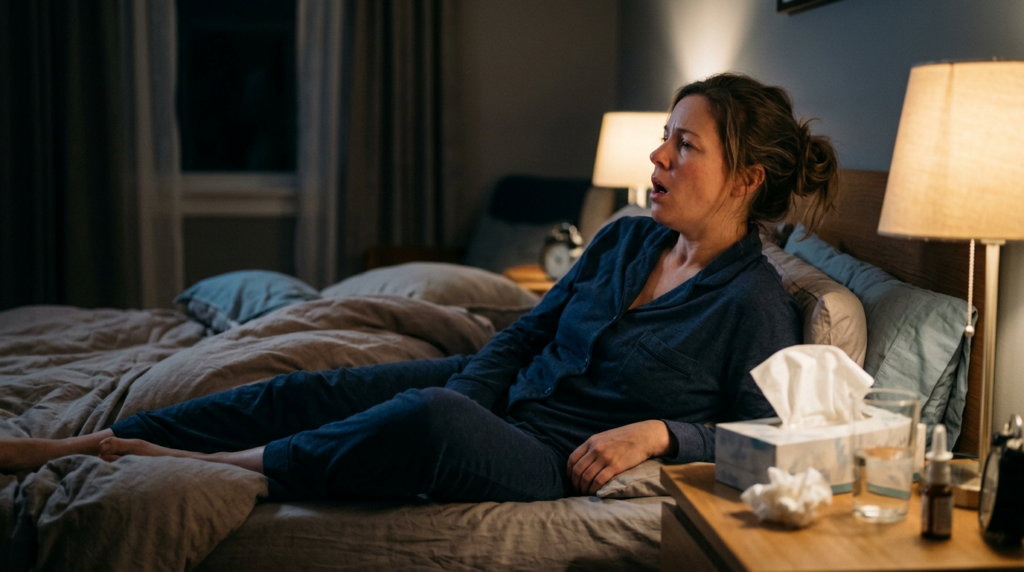
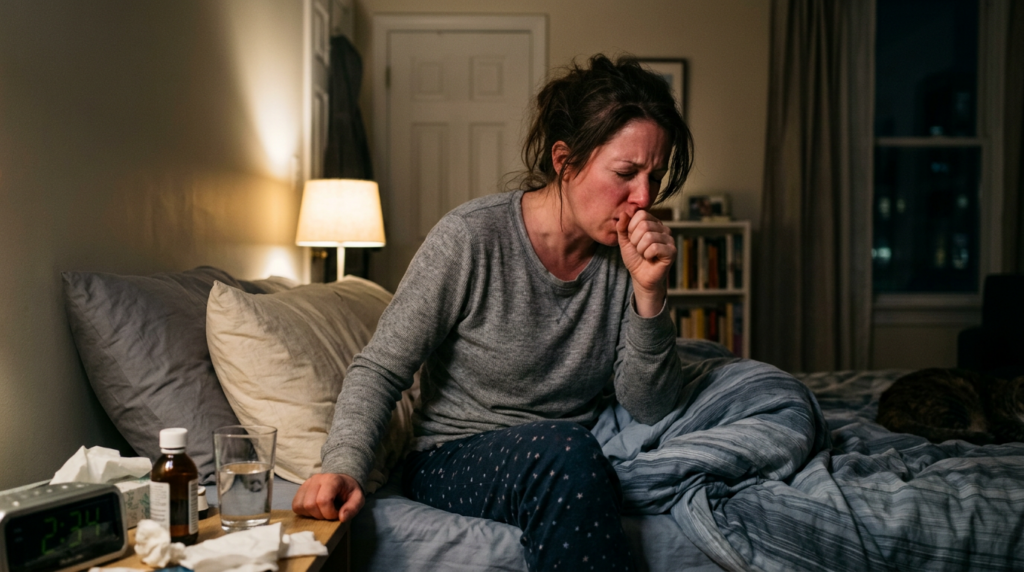
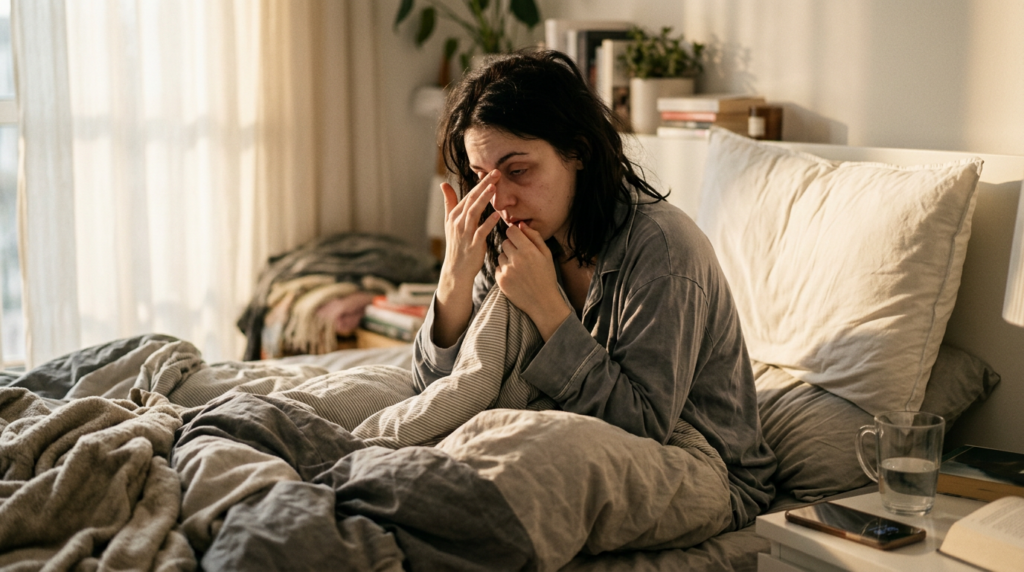
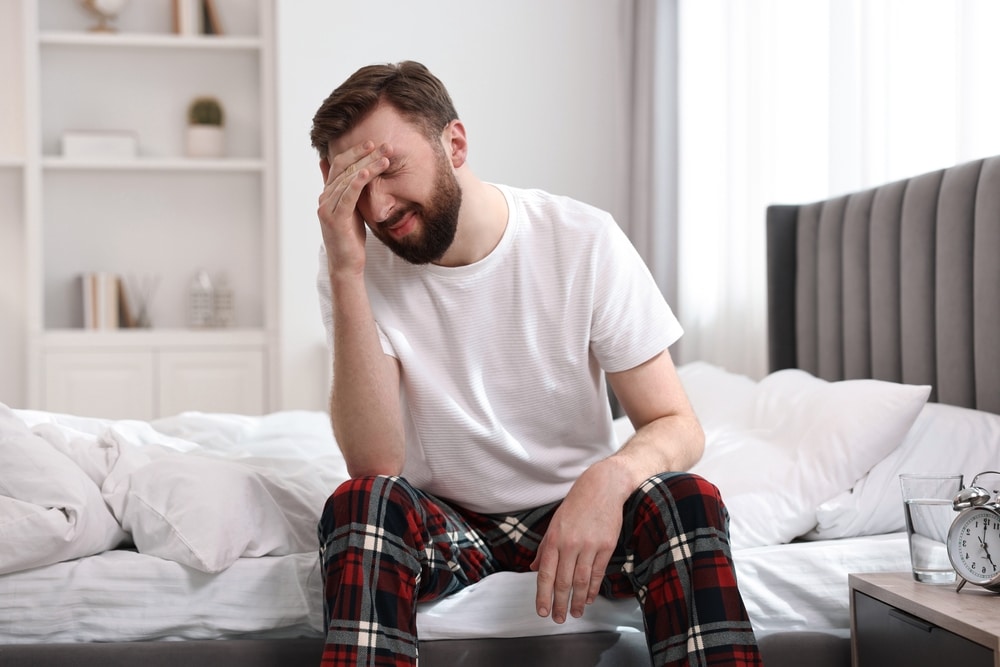
You wake up with a headache again.
Maybe your temples feel tight. Maybe your jaw feels tired. Maybe your mouth is dry and you still feel exhausted, even after a full night in bed.
Not every morning headache starts in your head.
Sometimes it starts in the jaw. Sometimes it starts in the airway. Sometimes both are part of the picture.
Two important possibilities are bruxism and obstructive sleep apnea. Bruxism includes clenching, grinding, and jaw bracing, and it can overload the jaw and temple muscles enough to trigger morning pain. Obstructive sleep apnea, or OSA, repeatedly disrupts breathing during sleep and can fragment sleep, reduce oxygen levels, and leave a person waking up with headache, dry mouth, and fatigue.2,4
Bruxism is common, with a 2024 systematic review and meta-analysis reporting pooled prevalence estimates of about 21% for sleep bruxism and 23% for awake bruxism. OSA is also common, with review-level adult prevalence estimates often cited in the 9% to 38% range, depending on the population and diagnostic definition used.1,2
Can sleep apnea cause morning headaches?
Yes. Sleep apnea can cause morning headaches, especially when headaches happen with snoring, dry mouth, poor sleep, choking, or daytime sleepiness. But bruxism is also a common cause, especially when morning headaches come with jaw soreness, temple tightness, facial tension, or tooth wear.
Morning headaches are not specific enough to diagnose either condition on their own. The pattern around the headache matters more than the headache by itself.3,4,5
A 2024 systematic review and meta-analysis found pooled prevalence of about 33% for morning headaches in OSA populations, which is high enough to take seriously without treating it as proof of OSA in every case.3
Does this sound like you?: What Is Obstructive Sleep Apnea? Symptoms, Causes, and Why It Matters
How to tell the difference:: What Is Bruxism? Teeth Grinding and Jaw Clenching Explained
What to read next: Headache and Facial Pain: Causes, Symptoms, and Treatment Options
Why bruxism is often the overlooked cause of morning headaches
If you wake up with temple pain, jaw tightness, facial soreness, or a tired feeling in your cheeks, bruxism deserves serious attention. Bruxism is not just tooth grinding. It also includes clenching and jaw bracing, which can overload the temporalis and masseter muscles. In severe cases, bruxism may cause morning jaw pain and temporal headaches.4
That is one reason many people misread the problem. They assume the pain must start in the head when the source may actually be repeated jaw-muscle loading.4
Does this sound familiar: What Is Bruxism? Teeth Grinding and Jaw Clenching Explained
This might help you: Signs of Bruxism: 10 Symptoms You Should Not Ignore
How to talk about this: How Dentists Diagnose Bruxism and What They Look For
The big Picture: How Bruxism Causes Jaw Pain, Headaches, and Tooth Damage
Can bruxism cause morning headaches? Yes, and here is why
A bruxism-related morning headache often happens because the jaw muscles never fully got a break. If the temporalis muscles stay active or overloaded during sleep, you may wake up feeling like you have a tension headache when the real driver is muscular strain around the jaw and temples.4 That possibility becomes even stronger when the headache shows up with:
- jaw soreness
- temple tightness
- facial tension
- tooth sensitivity
- cracked restorations
- worn teeth
- clenching during stress or concentration
This should help: Morning headaches: Is it Bruxism, Sleep Apnea or Something Else?
Yes, sleep apnea can also be a culprit
OSA belongs in this conversation because morning headaches are a recognized symptom in some people with sleep apnea.3,5 The same 2024 meta-analysis found pooled prevalence of about 33% for headaches and 33% for morning headaches in OSA populations.3
That does not mean every person with morning headaches has sleep apnea. It means sleep apnea should stay on the list, especially when the morning headache shows up with loud snoring, dry mouth, witnessed breathing pauses, choking, unrefreshing sleep, or daytime sleepiness.2,3
You will like this: What Is Obstructive Sleep Apnea? Symptoms, Causes, and Why It Matters
This will help Signs You May Need a Sleep Study
Zoom out a bit: Understanding Sleep Disorders: Beyond Just Fatigue
Why sleep apnea can trigger headaches after waking up
Sleep apnea repeatedly interrupts breathing during sleep. These events can lower oxygen, change carbon dioxide levels, fragment sleep, and trigger repeated arousals from sleep.2 OSA is characterized by repeated episodes of complete or partial upper-airway collapse that lead to oxygen desaturation or arousal and produce fragmented, non-restorative sleep.2
That kind of overnight physiologic stress may help explain why some people wake with head pain, grogginess, and the sense that sleep did not restore them.2,3
OSA-related headaches may also appear alongside symptoms that make the pattern easier to recognize, including:
- dry mouth
- brain fog
- waking unrefreshed
- snoring
- gasping or choking during sleep
- daytime sleepiness
That broader symptom pattern often matters more than the headache alone. 2,5
Quick self-check: which pattern sounds more like you?
More suggestive of bruxism
- jaw soreness on waking
- temple tightness
- facial tension
- tooth wear
- cracked dental work
- clenching during the day
- a partner hearing grinding
More suggestive of sleep apnea
- loud snoring
- witnessed pauses in breathing
- gasping or choking during sleep
- dry mouth on waking
- heavy daytime sleepiness
- brain fog
- waking unrefreshed
More suggestive of both
- snoring plus jaw pain
- dry mouth plus temple soreness
- morning headaches plus facial tension
- poor sleep plus tooth wear plus fatigue
This comparison is not a diagnosis tool, but it can help you tell if your mornings look more like a jaw-loading problem, a sleep-breathing problem, or a mixed picture.3,4,5
What do morning headaches from sleep apnea feel like?
A sleep-apnea-related morning headache is often described as dull, pressing, or diffuse on waking, and it may improve after getting out of bed.3,5
By contrast, a more jaw-driven headache often comes with temple tenderness, jaw stiffness, cheek soreness, or a tired, overworked feeling in the face.4
That distinction is not perfect, but it is practical. A person who wakes with both dry mouth and jaw pain should not automatically choose one explanation and ignore the other.3,4
Why the overlap is not rare
This article matters because both conditions are common.1,2 Bruxism is common. OSA is common. Both can affect how you feel in the morning. Both can coexist in the same person. Patients with bruxism require evaluation for potential underlying sleep disorders and associated risk factors.4 That supports a broader, pattern-based approach rather than treating jaw symptoms and sleep symptoms as separate silos.
Other causes of morning headaches that should not be ignored
Bruxism and sleep apnea are important causes of morning headaches, but they are not the only ones. Morning head pain can also be related to:
- migraine
- tension-type headache
- sinus or nasal problems
- dehydration
- caffeine withdrawal
- medication effects
- poor sleep position
- high blood pressure
That broader framing improves trust and usefulness because it tells the reader not to force every morning headache into one explanation.5 Older research on OSA and morning headache also supports the idea that morning headache is a nonspecific symptom, which makes differential thinking important.5
What to track for 7 days before you seek help
If morning headaches keep happening, track:
- when the headache starts
- where the pain is located
- jaw soreness or temple tenderness
- dry mouth on waking
- snoring or partner observations
- daytime fatigue
- caffeine and alcohol use
- sleep position
- whether the headache fades after getting up
This kind of tracking can make it easier to see whether the pattern looks more like jaw loading, sleep-disordered breathing, or another headache pattern. It also gives a dentist, physician, or sleep specialist better information to work with when evaluation begins.4,5
How morning headaches are evaluated when bruxism or sleep apnea is suspected
Evaluation usually begins with history. A clinician may ask when the headache happens, whether the pain is worst on waking, whether you snore, whether your mouth is dry, whether your jaw feels sore, and whether anyone has noticed grinding or pauses in breathing.4,5
Dental evaluation may look for tooth wear, jaw-muscle tenderness, broken dental work, and other signs of bruxism. Sleep-focused evaluation may lead to a home sleep test or an in-lab sleep study if OSA is suspected.4
What helps if bruxism or sleep apnea is behind morning headaches?
If bruxism is driving the problem, treatment often focuses on reducing jaw loading, recognizing clenching patterns, and protecting teeth when needed.4 If sleep apnea is driving the problem, treatment may involve CPAP, oral appliance therapy, positional strategies, or other airway-focused approaches depending on the case.2 If both are contributing, treating only one piece may leave symptoms behind. 2,4
When morning headaches should prompt medical attention
Seek medical attention sooner if morning headaches are:
- frequent
- worsening
- paired with loud snoring or choking
- linked with marked daytime sleepiness
- accompanied by neurologic symptoms
- unusually severe or sudden in onset
Morning headaches are often benign, but a recurring pattern, a changing pattern, or one that comes with red-flag symptoms deserves proper evaluation.2,5
The bottom line
If you wake up with headaches, bruxism is a common cause worth considering first, especially when the morning includes jaw soreness, temple tightness, facial tension, or tooth wear.1,4
Sleep apnea can also be a culprit, especially when the pattern includes snoring, dry mouth, poor sleep, and daytime fatigue.2,3 Because both disorders are common, overlap is not unusual.1,2,4
The most useful question is not just, “Why do I wake up with a headache?”
It is, “What pattern keeps showing up in my mornings?”
SEO FAQ
Can sleep apnea cause morning headaches?
Yes. Sleep apnea can cause morning headaches, especially when they happen with snoring, dry mouth, poor sleep, choking, or daytime sleepiness.
Can bruxism cause morning headaches?
Yes. Severe bruxism can lead to morning jaw pain and temporal headaches, especially when clenching or grinding overloads the jaw muscles overnight.
Which is more likely to cause morning headaches, bruxism or sleep apnea?
It depends on the symptom pattern. Jaw soreness, temple tightness, facial tension, and tooth wear lean more toward bruxism. Snoring, dry mouth, witnessed apneas, and daytime sleepiness lean more toward sleep apnea.
What does a sleep apnea headache feel like?
It is often described as dull, pressing, or diffuse on waking and may improve after getting out of bed.
What does a bruxism headache feel like?
It often comes with temple tenderness, jaw fatigue, facial tightness, or soreness around the chewing muscles.
Can you have both bruxism and sleep apnea at the same time?
Yes. Since both disorders are common and bruxism evaluation should include consideration of underlying sleep disorders, overlap is plausible and important to recognize.
Should I get a sleep study if I wake up with headaches?
A sleep study may be worth discussing if morning headaches happen with loud snoring, dry mouth, daytime sleepiness, choking, or witnessed breathing pauses. Your live sleep-study article also includes waking with headaches or dry mouth among the reasons to consider testing.
Are morning headaches enough to diagnose sleep apnea?
No. Morning headaches are nonspecific and are not enough on their own to diagnose OSA.
What other causes of morning headaches should be considered?
Migraine, tension-type headache, sinus problems, dehydration, caffeine withdrawal, medication effects, and high blood pressure can also contribute.
References
- Zieliński G, Więckiewicz M, and colleagues. Global Prevalence of Sleep Bruxism and Awake Bruxism in Pediatric and Adult Populations: A Systematic Review and Meta-Analysis. 2024.
- Iannella G, Magliulo G, and colleagues. The Global Burden of Obstructive Sleep Apnea. 2025.
- Błaszczyk B, Pływaczewski R, and colleagues. Prevalence of Headaches and Their Relationship With Obstructive Sleep Apnea: Systematic Review and Meta-Analysis. 2024.
- Lal SJ, Jha S, Wang B, and colleagues. Bruxism Management. StatPearls. Updated 2024.
- Aldrich MS, Chauncey JB. Are Morning Headaches Part of Obstructive Sleep Apnea Syndrome? 1990. Supported here for the nonspecific nature of morning headache in OSA discussions and reflected in the current review literature

Randy Clare is a writer, educator, and health communicator focused on making complex clinical topics easier to understand. Through The Sleep and Respiratory Scholar, he creates clear, practical content on bruxism, headache, sleep, airway health, and respiratory symptoms. He is the author of The Brux Method, President of ClenchAlert.com and host of The Clenching Chronicle Podcast, where he explores jaw tension, clenching, headaches, and behavior-based approaches to relief. His work helps readers better understand symptoms, recognize patterns, and take more informed next steps.