

Last updated on May 6th, 2026 at 06:29 am
Medically responsible content note:
This article is for education only and does not diagnose or treat medical, dental, or sleep conditions. Bruxism, jaw pain, headaches, snoring, breathing pauses, and respiratory symptoms can have multiple causes. Seek care from a qualified medical, dental, sleep, or orofacial pain professional when symptoms are persistent, worsening, severe, or disruptive.
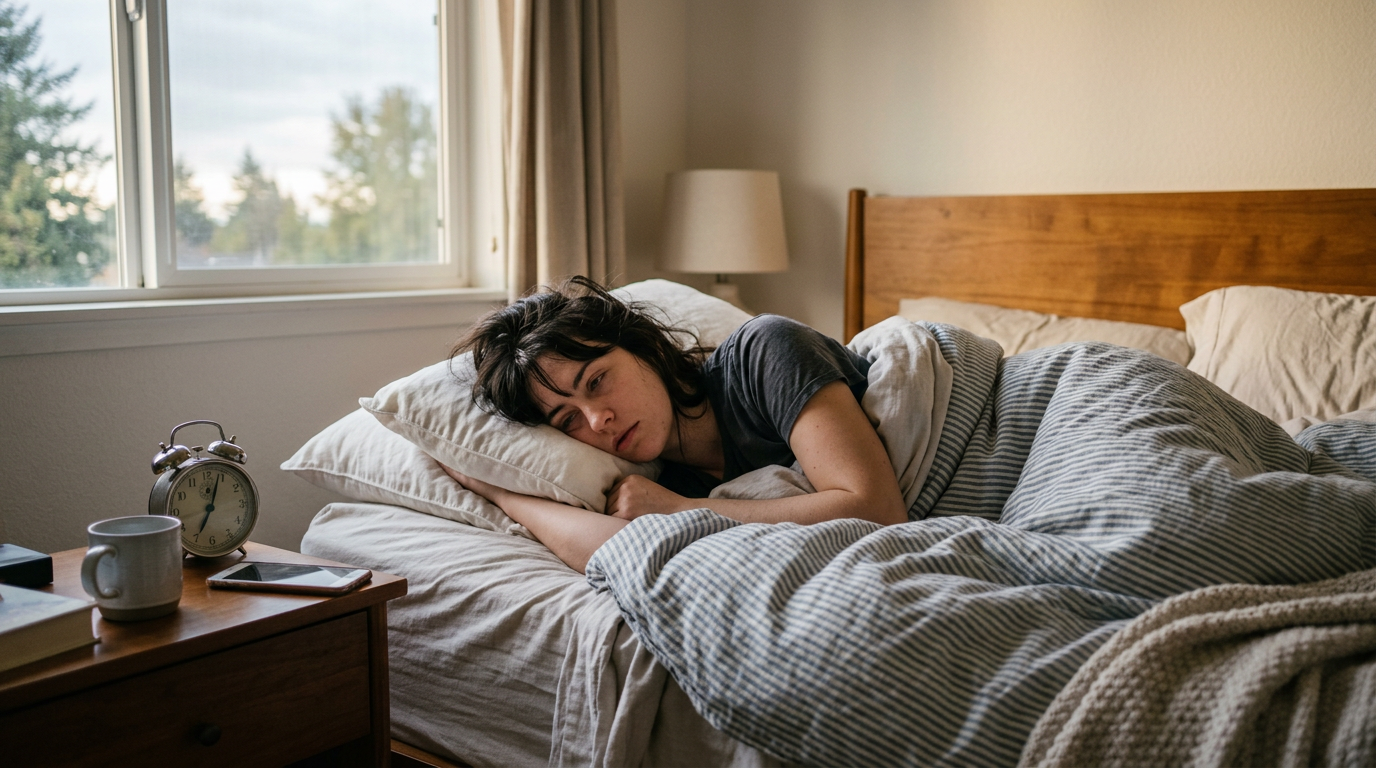
Waking up tired after 8 hours of sleep can feel confusing. You went to bed on time, gave yourself a full night, and maybe your sleep tracker even showed “enough” sleep. But sleep duration is not the same as sleep quality. If your sleep is fragmented, your brain may be pulled out of deeper sleep again and again. This can happen with snoring, breathing changes, jaw clenching, pain, stress, reflux, alcohol, medications, or an irregular sleep schedule. As a result, you may wake up tired even after spending enough time in bed.
You did what everyone tells you to do.
You went to bed on time. You gave yourself 8 hours. Maybe your sleep tracker even said you had a decent night.
So why do you still wake up tired?
That disconnect is frustrating because sleep can feel like a math problem. Eight hours should equal a rested body. But sleep does not work only by the clock.
Quick answer: Waking up tired after 8 hours of sleep often means your sleep was long enough but not restorative enough. Common reasons include fragmented sleep, snoring, sleep apnea, mouth breathing, bruxism, stress, pain, reflux, alcohol, medications, or irregular sleep timing.
Doctors often describe this pattern as unrefreshing sleep, meaning you slept but did not wake feeling restored.
This article is part of our larger guide to Morning Symptoms: What Your Body May Be Telling You After Sleep where we explain how headache, jaw pain, dry mouth, fatigue, breathing symptoms, and sleep quality can overlap.
In one sentence: Waking up tired after 8 hours often means your sleep quantity looks adequate, but your sleep quality may be poor.
If this is part of a larger pattern, start with the broader guide to morning symptoms so you can connect tiredness with other clues such as dry mouth, headaches, jaw pain, gasping, or brain fog.
Key Takeaways
- Waking up tired after 8 hours often means your sleep was long enough, but not restorative enough.
- Common causes include fragmented sleep, sleep apnea, snoring, mouth breathing, bruxism, stress, pain, reflux, alcohol, medications, and irregular sleep timing.
- Track morning symptoms such as dry mouth, headaches, jaw pain, gasping, brain fog, and daytime sleepiness.
- Ask for medical help if tired mornings are persistent, worsening, or paired with snoring, gasping, breathing pauses, severe daytime sleepiness, or drowsy driving.
Why Am I Waking Up Tired After 8 Hours of Sleep?
Eight hours in bed does not always mean eight hours of restorative sleep.
During a normal night, your brain moves through non-REM and REM sleep. The National Heart, Lung, and Blood Institute explains that sleep cycles through REM and non-REM phases about every 80 to 100 minutes, usually four to six times per night.¹ These stages matter because different parts of sleep support physical recovery, memory, emotional regulation, and daytime alertness.
If your sleep is repeatedly interrupted, you may not spend enough time in the stages that help you wake up restored. Some interruptions are obvious. You wake up, look at the clock, and remember it in the morning. Others are brief arousals you may never notice.
This is one reason a person can say, “I slept all night,” but still wake up exhausted.
| Possible Pattern | What You May Notice |
| Poor sleep quality | You slept long enough but still feel unrested |
| Sleep apnea or snoring | Gasping, choking, dry mouth, morning headaches |
| Mouth breathing | Dry mouth, sore throat, thirst, bad breath |
| Bruxism or jaw clenching | Jaw pain, tooth sensitivity, temple soreness |
| Stress or insomnia | Racing thoughts, restless sleep, early waking |
| Pain or muscle tension | Neck pain, headaches, facial soreness |
| Reflux, alcohol, caffeine, or medications | Sleep disruption, waking often, morning grogginess |
| Irregular sleep timing | Brain fog, grogginess, inconsistent energy |
The key point is simple: sleep quantity and sleep quality are not the same thing.
Sleep Apnea and Breathing Problems Can Leave You Tired in the Morning
Sleep apnea can make you wake up tired after 8 hours because breathing disruptions can repeatedly fragment sleep, even when you do not remember waking.
Sleep apnea can cause breathing to stop and restart during sleep. According to the National Heart, Lung, and Blood Institute, symptoms can include breathing that starts and stops, frequent loud snoring, and gasping for air during sleep. People may not know they have these symptoms unless someone else notices them.²
This matters because breathing disruptions can pull the brain out of deeper sleep. You may spend enough time in bed but still wake with poor energy because your body kept reacting to airway obstruction, breathing effort, or oxygen changes.
Tired mornings may deserve sleep apnea screening if they appear with loud snoring, gasping, choking, witnessed pauses in breathing, morning headaches, dry mouth, daytime sleepiness, or trouble concentrating. Mayo Clinic also lists loud snoring, gasping or choking, breathing pauses, and excessive daytime drowsiness as reasons to consult a healthcare professional about possible obstructive sleep apnea.³
Snoring does not always mean sleep apnea. Not everyone with sleep apnea has the same symptoms. But if you keep waking up tired after 8 hours and your sleep includes snoring, gasping, dry mouth, or morning headaches, the breathing pattern is worth discussing with a clinician.
If gasping is one of your main clues, read the related guide on waking up gasping. If dry mouth is part of the pattern, read the guide on waking up with dry mouth. If headaches are your main morning symptom, start with why do I wake up with a headache?
Mouth Breathing at Night May Affect Sleep Quality
Mouth breathing at night can be another clue when sleep feels unrefreshing.
Some people breathe through the mouth because of nasal congestion, allergies, a deviated septum, airway resistance, sleep position, or habit. Others mouth-breathe more when they snore or have disturbed nighttime breathing.
Mouth breathing is not the same thing as sleep apnea. A person can mouth-breathe without having apnea. But when mouth breathing appears with snoring, gasping, dry mouth, morning headaches, or daytime sleepiness, it becomes part of a larger pattern worth tracking.
Common morning clues include dry mouth, bad breath, sore throat, thirst, sticky saliva, or waking with the feeling that your mouth was open most of the night. These signs do not diagnose the cause, but they can help you decide what to bring up with a medical or dental professional.
A dry mouth in the morning is not just an annoyance. It may be a sign that your nighttime breathing pattern deserves attention.
If this sounds familiar, read the related article on mouth breathing at night.
Bruxism, Jaw Clenching, and Muscle Activity May Disrupt Rest
Bruxism may contribute to tired mornings when jaw muscle activity, pain, or related arousals make sleep feel less restorative.
If you wake with jaw soreness, temple tenderness, tooth sensitivity, or a morning headache, your jaw muscles may be part of the story. Sleep bruxism can involve clenching, grinding, or rhythmic jaw muscle activity during sleep. Some people also clench during the day, especially during concentration, driving, screen use, or stress. That can leave the jaw already tense before bedtime.
Bruxism does not automatically mean your sleep is poor. The relationship is more nuanced. A 2024 review of sleep bruxism described it as a complex condition involving diagnosis challenges, orofacial effects, comorbid sleep disorders, and management considerations.⁴ Research also suggests sleep bruxism events may be time-related to arousals in adults with obstructive sleep apnea, although they may not directly correlate with every respiratory event.⁵
That distinction matters. Tired mornings may come from bruxism, breathing problems, pain, stress, sleep fragmentation, or a combination of these factors.
Watch for a pattern that includes jaw pain, tooth sensitivity, morning headaches, temple soreness, neck tension, facial fatigue, tooth wear, cracked teeth, a worn mouthguard, or reports of grinding sounds during sleep. If these symptoms keep showing up with unrefreshing sleep, a dentist trained in bruxism or dental sleep medicine may help you sort out what is happening.
For more detail, read how bruxism can affect sleep quality. If jaw soreness is your main morning clue, continue with waking up with jaw pain. If you are unsure whether your clenching happens during the day or at night, read awake bruxism vs sleep bruxism.
Stress Can Keep Your Nervous System on Alert During Sleep
Stress can make you wake up tired because your nervous system may stay activated even after you fall asleep.
You may be physically in bed, but your body may still be on alert. This can make sleep lighter, more restless, or easier to interrupt. You may wake up during the night, wake too early, or wake after 8 hours feeling as if your body never fully powered down.
This pattern can show up as racing thoughts before bed, tight shoulders, jaw tension, restless sleep, early morning waking, or feeling “wired but tired.” Mayo Clinic notes that long-term insomnia is often related to stress, life events, or habits that disrupt sleep.⁶ Mayo Clinic also notes that schedule changes, medicines, caffeine, alcohol, and other substances can affect sleep.⁷
This is why stress jaw and poor sleep often travel together. You may not simply “feel stressed.” You may carry stress in your breathing, shoulders, neck, jaw, and sleep pattern.
If your jaw gets tight during stress or focus, read the guide to stress jaw. For a practical next step, learn why the teeth-apart resting jaw position matters for people who clench.
Pain, Headaches, and Muscle Tension Can Make Sleep Less Restorative
Pain can make sleep feel less restorative because discomfort may keep sleep shallow or cause repeated awakenings.
Pain and sleep influence each other. Pain can wake you up or keep your sleep shallow. Poor sleep can also make the nervous system more sensitive to pain. This can create a frustrating cycle: you wake up tired, your body hurts, your day feels harder, and the next night’s sleep may be affected again.
This pattern may include neck pain, shoulder tension, jaw pain, tension-type headache, migraine patterns, back pain, sinus pressure, tooth pain, or facial soreness.
It is especially important to notice when tired mornings happen with recurring morning headaches, jaw soreness, or neck stiffness. Those symptoms may point to sleep position, bruxism, airway strain, muscle tension, headache disorders, or several overlapping issues.
The goal is not to self-diagnose. The goal is to notice the pattern clearly enough to describe it.
If neck pain and headache happen together, read morning neck pain and headache. If tooth pain is part of the morning pattern, read waking up with tooth pain.
Your Sleep Schedule May Be Working Against Your Body Clock
You may wake up tired after 8 hours if your sleep schedule is inconsistent or misaligned with your body clock.
This can happen with shift work, late-night screen use, long naps, travel, weekend sleep-ins, or irregular wake times.
Your body works best when sleep and wake timing are predictable. A steady wake time helps anchor your circadian rhythm. When bedtime and wake time shift too much, your body may feel as if it is waking at the wrong biological time.
Mayo Clinic lists schedule changes such as jet lag and shift work among factors that can disrupt the sleep-wake cycle.⁷
A simple question can help: Do I feel tired because I did not sleep long enough, or because my sleep timing is unstable?
Alcohol, Caffeine, Meals, Reflux, and Medications May Affect Sleep Quality
Alcohol, caffeine, reflux, heavy meals, and some medications can make 8 hours of sleep feel less restorative.
Alcohol may make you feel sleepy at first, but it can worsen sleep quality later in the night. Caffeine can interfere with sleep, especially when used too late in the day. Heavy meals close to bedtime may worsen reflux or discomfort. Certain medications can also affect sleepiness, alertness, dreams, or sleep continuity.
Mayo Clinic advises limiting or avoiding caffeine, alcohol, and nicotine when addressing insomnia and notes that some medications and substances can affect sleep.⁶ ⁷
Nighttime reflux is another common sleep disruptor. If reflux symptoms worsen when lying down, sleep may become lighter or more interrupted. The National Institute of Diabetes and Digestive and Kidney Diseases lists GERD symptoms such as heartburn and regurgitation and notes that GERD symptoms can interfere with sleep.⁸
Consider whether tired mornings are worse after alcohol, late caffeine, heavy meals, reflux symptoms, late-night snacks, new medications, medication timing changes, or nicotine use.
Do not stop or change prescribed medication without speaking with your clinician. But do track timing, symptoms, and changes. That information may help your healthcare provider identify what is affecting your sleep.
What Not to Assume From One Tired Morning
One tired morning does not prove you have a sleep disorder.
It also does not prove you are fine.
The safest approach is to avoid jumping to conclusions in either direction. Do not assume that 8 hours automatically means healthy sleep. Do not assume tired mornings always mean sleep apnea. Do not assume jaw pain always means nighttime grinding. Do not assume a sleep tracker can rule out a sleep disorder. And do not ignore warning signs such as gasping, witnessed breathing pauses, severe daytime sleepiness, or drowsy driving.
Drowsy driving deserves special attention. The CDC advises that people should get enough sleep, seek treatment for sleep disorders, and avoid alcohol before driving. The CDC also identifies untreated sleep disorders and sedating medications as risk factors for drowsy driving.⁹
The point is not to panic. The point is to take repeated patterns seriously.
What to Track Before You Ask for Help
Tracking your symptoms can help turn vague tiredness into a clearer pattern.
You do not need complicated data. You need patterns. Track for 1 to 2 weeks and bring the notes to your physician, dentist, sleep clinician, or other healthcare professional.
Track your bedtime, wake time, estimated sleep hours, number of awakenings, snoring, gasping, dry mouth, morning headache, jaw pain, tooth sensitivity, neck pain, morning brain fog, daytime sleepiness, naps, caffeine timing, alcohol timing, stress level, screen use, exercise timing, reflux symptoms, and medication changes.
Also ask a bed partner what they notice. They may hear snoring, pauses in breathing, grinding sounds, restlessness, or gasping that you do not remember.
For a more structured approach, use the morning headache checklist to organize symptoms before your appointment.
When to Worry About Waking Up Tired After 8 Hours
You should worry about waking up tired after 8 hours when it is persistent, worsening, or paired with symptoms that suggest disrupted breathing, unsafe sleepiness, pain, or another health concern.
Waking up tired once in a while is common. Waking up tired after 8 hours again and again deserves attention, especially when it affects work, driving, mood, memory, or daily function.
Ask for professional help if tired mornings are persistent, worsening, or paired with loud snoring, gasping, choking, witnessed pauses in breathing, morning headaches, high blood pressure, severe daytime sleepiness, drowsy driving, jaw pain, tooth wear, cracked teeth, frequent morning dry mouth, mood changes, trouble concentrating, new fatigue, or symptoms that continue despite enough sleep.
A primary care physician can help screen for medical causes of fatigue and refer for sleep testing when appropriate. A sleep physician can evaluate possible sleep apnea or other sleep disorders. A dentist trained in bruxism or dental sleep medicine can check for tooth wear, jaw muscle tenderness, oral appliance needs, and signs that sleep-disordered breathing may need medical evaluation. An ENT specialist may help when nasal obstruction, chronic congestion, or structural airway issues are prominent. An orofacial pain specialist may be helpful when jaw, face, head, or neck pain is persistent.
What May Help Improve Sleep Quality
Improving sleep quality usually starts with pattern recognition. Small changes may help, but they are not a substitute for medical evaluation when warning signs are present.
Start with sleep timing
Keep a consistent wake time, even on weekends when possible. Build a wind-down routine that helps your body shift out of work, screens, stress, and stimulation. Avoid long or late naps if they make nighttime sleep harder.
Look at breathing clues
Pay attention to snoring, gasping, dry mouth, nasal congestion, and morning headaches. If snoring is worse on your back, side sleeping may help some people, but it should not replace evaluation when apnea symptoms are present. If you regularly wake tired with breathing-related clues, ask whether sleep apnea screening is appropriate.
Watch the jaw pattern
If you wake with jaw pain, tooth sensitivity, temple soreness, or morning headaches, ask your dentist about signs of bruxism, tooth wear, muscle tenderness, or oral appliance needs. If you clench during the day, practice a simple awareness cue: lips together, teeth apart, jaw relaxed. Your teeth are not meant to stay together all day.
If you are unsure whether your symptoms need dental evaluation, read when to see a dentist for bruxism.
Review evening inputs
Notice whether alcohol, late caffeine, nicotine, reflux, heavy meals, medication timing, or late-night screen use make your sleep worse. Do not change prescribed medications without medical guidance, but do bring your observations to your clinician.
What This Symptom Pattern May Mean
Waking up tired after 8 hours of sleep does not point to one single answer.
It may mean your sleep is being interrupted by breathing changes. It may mean pain or jaw activity is making sleep less restorative. It may mean stress is keeping your nervous system activated. It may mean your sleep schedule is misaligned. It may mean alcohol, caffeine, reflux, medication effects, or another medical issue is contributing.
It may also mean more than one factor is present.
That is why the pattern matters. Do you wake tired with dry mouth? With headaches? With jaw pain? With snoring? With gasping? With neck tension? With brain fog? With daytime sleepiness?
The more clearly you can describe the pattern, the easier it is to ask the right professional for help.
Conclusion
Waking up tired after 8 hours of sleep can feel discouraging because it seems as if you did everything right. You gave yourself enough time in bed. You tried to rest. You expected your body to recover.
But sleep is not just a number.
Restorative sleep depends on breathing, sleep continuity, sleep timing, nervous system regulation, pain control, and overall health. If any of those pieces are disrupted, 8 hours may not feel like enough.
The Sleep and Respiratory Scholar helps readers connect symptoms that are often treated separately. If tired mornings keep showing up with dry mouth, snoring, jaw pain, headaches, gasping, reflux, or brain fog, the pattern matters.
Track it. Name it. Bring it to the right professional.
Read Next
- If you wake with dry mouth, start with Waking Up With Dry Mouth: Mouth Breathing, Snoring, or Sleep Apnea?
- If jaw pain is part of your morning pattern, read Waking Up With Jaw Pain: Common Causes and What to Notice
- If headaches are your main symptom, read Why Do I Wake Up With a Headache?
FAQ
Why do I wake up tired after 8 hours of sleep?
You may be getting enough time in bed but not enough restorative sleep. Your sleep may be fragmented by breathing problems, snoring, sleep apnea, stress, pain, bruxism, alcohol, caffeine, reflux, medications, or an irregular sleep schedule. If this happens repeatedly, track your symptoms and discuss them with a healthcare professional.
Can sleep apnea make me tired even if I sleep 8 hours?
Yes. Sleep apnea can repeatedly interrupt breathing and sleep continuity. You may not remember waking up, but your body may still react to airway obstruction, oxygen changes, or breathing effort. Common clues include loud snoring, gasping, witnessed pauses in breathing, morning headaches, dry mouth, and daytime sleepiness.² ³
Is waking up tired normal?
Occasional tiredness can happen after stress, illness, travel, alcohol, poor sleep timing, or a difficult day. Repeated unrefreshing sleep is different. If you regularly wake up tired after enough sleep, especially with snoring, gasping, headaches, dry mouth, jaw pain, or daytime sleepiness, it is worth asking for professional guidance.
Can bruxism make me feel tired in the morning?
Bruxism may overlap with morning jaw soreness, headaches, tooth sensitivity, facial fatigue, and poor perceived sleep quality. It may not be the only cause of tired mornings, but it is worth considering if you wake with jaw pain, tooth symptoms, or reports of grinding sounds during sleep.⁴ ⁵
Can stress make me wake up tired?
Yes. Stress can keep the nervous system more alert, make sleep lighter, and contribute to frequent waking or early morning waking. Stress can also show up physically as jaw tension, shoulder tension, racing thoughts, or a “wired but tired” feeling.⁶
Should I trust my sleep tracker if it says I slept 8 hours?
A sleep tracker can be useful for noticing patterns, but it cannot diagnose or rule out sleep apnea, bruxism, insomnia, or other sleep disorders. If you wake up tired repeatedly, especially with snoring, gasping, dry mouth, morning headaches, or daytime sleepiness, discuss the pattern with a healthcare professional.
Why do I wake up tired but not sleepy?
You may wake up tired but not sleepy when your body feels unrested, tense, sore, or foggy even though you are not fighting to stay awake. This can happen with fragmented sleep, stress, pain, bruxism, irregular sleep timing, or poor sleep quality. It may also happen when sleep was long enough by the clock but not restorative enough for your body.
Can sleeping too much make me tired?
Yes, some people feel groggy after sleeping longer than usual, especially if they wake during deep sleep, have an irregular schedule, are recovering from sleep debt, or have an underlying health issue. If you often need extra sleep and still wake tired, track the pattern and ask a healthcare professional.
What should I track if I keep waking up tired?
Track bedtime, wake time, estimated sleep hours, awakenings, snoring, gasping, dry mouth, headaches, jaw pain, tooth sensitivity, neck pain, brain fog, naps, caffeine, alcohol, stress, reflux symptoms, and medication changes. A 1- to 2-week log can help your physician, dentist, or sleep clinician see patterns more clearly.
References
- National Heart, Lung, and Blood Institute. How Sleep Works: Sleep Phases and Stages. Updated March 24, 2022. Accessed April 29, 2026. https://www.nhlbi.nih.gov/health/sleep/stages-of-sleep
- National Heart, Lung, and Blood Institute. Sleep Apnea: Symptoms. Updated January 9, 2025. Accessed April 29, 2026. https://www.nhlbi.nih.gov/health/sleep-apnea/symptoms
- Mayo Clinic. Obstructive Sleep Apnea: Symptoms and Causes. Updated December 4, 2025. Accessed April 29, 2026. https://www.mayoclinic.org/diseases-conditions/obstructive-sleep-apnea/symptoms-causes/syc-20352090
- Kim HK. Sleep bruxism in adults: a comprehensive review of clinical implications and management. Sleep Med Res. 2024. https://sleepmedres.org/journal/view.php?doi=10.17241/smr.2024.02258
- Li D, Aarab G, Lobbezoo F, et al. Sleep bruxism is highly prevalent in adults with obstructive sleep apnea. J Clin Sleep Med. 2023;19(3):443-451. https://pmc.ncbi.nlm.nih.gov/articles/PMC9978428/
- Mayo Clinic. Insomnia: Symptoms and Causes. Updated January 16, 2024. Accessed April 29, 2026. https://www.mayoclinic.org/diseases-conditions/insomnia/symptoms-causes/syc-20355167
- Mayo Clinic. Sleep Disorders: Symptoms and Causes. Updated September 10, 2024. Accessed April 29, 2026. https://www.mayoclinic.org/diseases-conditions/sleep-disorders/symptoms-causes/syc-20354018
- National Institute of Diabetes and Digestive and Kidney Diseases. Symptoms & Causes of GER & GERD. Accessed April 29, 2026. https://www.niddk.nih.gov/health-information/digestive-diseases/acid-reflux-ger-gerd-adults/symptoms-causes
- Centers for Disease Control and Prevention. Drowsy Driving — 19 States and the District of Columbia, 2009–2010. MMWR Morb Mortal Wkly Rep. 2013;61(51-52):1033-1037. https://www.cdc.gov/mmwr/preview/mmwrhtml/mm6151a1.htm

Randy Clare is a writer, educator, and health communicator focused on making complex clinical topics easier to understand. Through The Sleep and Respiratory Scholar, he creates clear, practical content on bruxism, headache, sleep, airway health, and respiratory symptoms. He is the author of The Brux Method, President of ClenchAlert.com and host of The Clenching Chronicle Podcast, where he explores jaw tension, clenching, headaches, and behavior-based approaches to relief. His work helps readers better understand symptoms, recognize patterns, and take more informed next steps.