
Last updated on April 20th, 2026 at 11:21 am
Medically responsible content note:
This article is for education only and does not diagnose or treat medical, dental, or sleep conditions. Bruxism, jaw pain, headaches, snoring, breathing pauses, and respiratory symptoms can have multiple causes. Seek care from a qualified medical, dental, sleep, or orofacial pain professional when symptoms are persistent, worsening, severe, or disruptive.
Have you ever slept a full night and still woken up tired, foggy, or unrefreshed? Sometimes the problem is not only how long you slept. It may also be how well you were breathing while you slept. Sleep apnea can cause breathing to stop and restart many times during sleep, which can reduce oxygen and disrupt rest.
Shallow breathing during sleep can interfere with oxygen levels, fragment sleep, and leave you dragging the next day. In sleep medicine, episodes of reduced breathing during sleep are often called hypopneas. The American Academy of Sleep Medicine defines adult hypopneas using criteria that include at least a 30% drop in airflow lasting at least 10 seconds, along with either oxygen desaturation or an arousal.
For most readers, shallow breathing during sleep is easier to understand than hypopnea. That is why this article uses both terms. The plain-language phrase improves clarity, while the medical term improves precision. This matters because obstructive sleep apnea commonly includes both apneas, where airflow stops, and hypopneas, where airflow is reduced.
What Is a Hypopnea?
A hypopnea is a sleep-related breathing event in which airflow becomes significantly reduced during sleep. Unlike an apnea, breathing does not stop completely. Instead, airflow drops enough to disturb sleep, lower oxygen levels, or both. In adults, the event must last at least 10 seconds to meet standard scoring criteria.
In practical terms, a hypopnea is a medically recognized episode of shallow breathing during sleep. Even though the person keeps breathing, the reduction in airflow can still matter. Repeated hypopneas can contribute to interrupted sleep, morning grogginess, daytime sleepiness, headaches, trouble concentrating, and poor sleep quality overall.
Is Shallow Breathing During Sleep a Sign of Sleep Apnea?
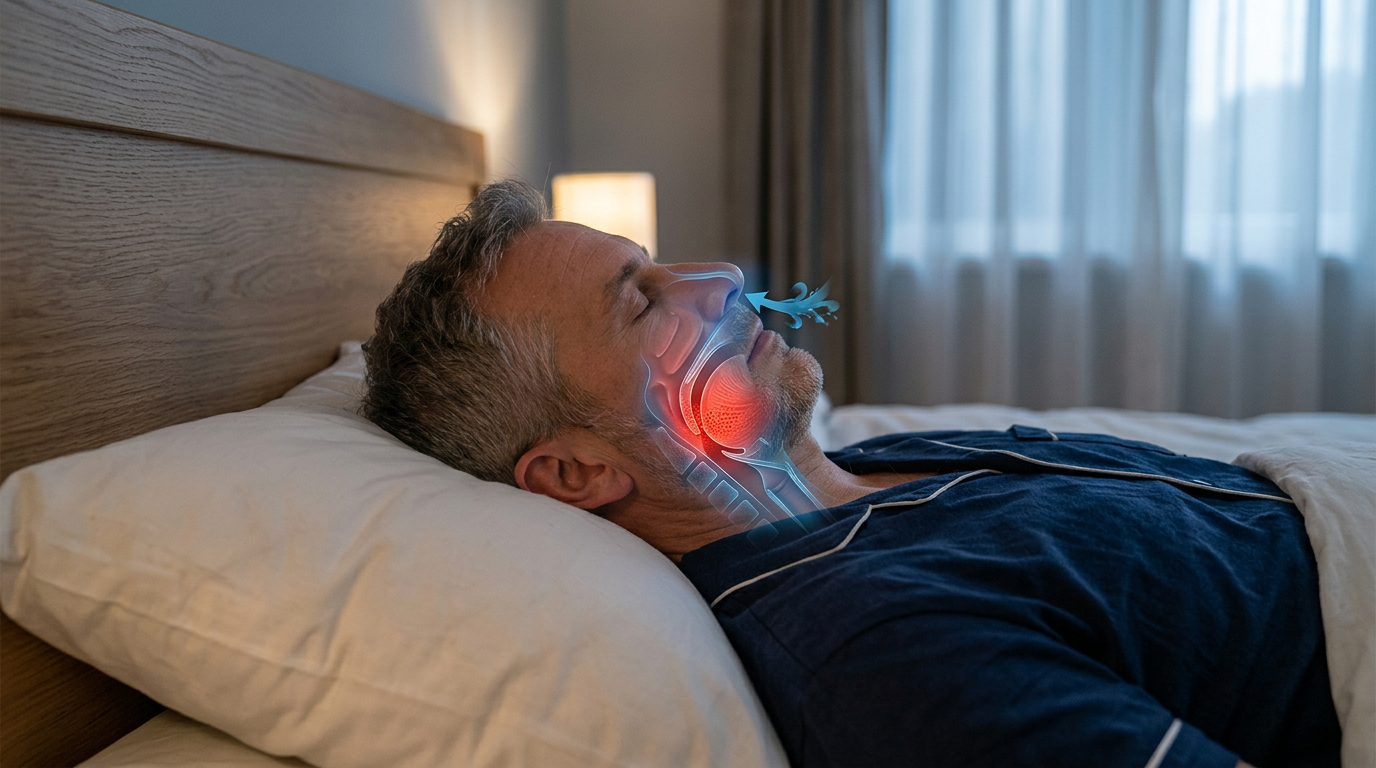
Sometimes, yes. Sleep apnea is a disorder in which breathing repeatedly stops and restarts during sleep. The most common form is obstructive sleep apnea, which happens when the upper airway narrows or collapses and reduces or completely stops airflow.
Obstructive sleep apnea is commonly associated with loud snoring, gasping, choking, and breathing that starts and stops during sleep. Many people do not realize these events are happening until a bed partner notices them or a sleep study captures them.
There is also central sleep apnea, which is different. In central sleep apnea, the problem is not a blocked airway. Instead, the brain does not properly signal the breathing muscles to maintain normal breathing during sleep.
To learn more about obstructive sleep apnea and why it matters, click here.
Symptoms That May Go Along With Shallow Breathing at Night
Shallow breathing during sleep is not always obvious. A person may sleep through the events and still wake up feeling poorly rested. Symptoms linked to sleep apnea and other sleep-related breathing problems can include loud snoring, gasping for air, waking unrefreshed, daytime sleepiness, headaches, irritability, and trouble with attention or memory.
Some people mainly notice the daytime effects. They feel unusually sleepy, mentally dull, or less resilient after a short night of sleep. Others wake with headaches or notice that their mood worsens when their sleep is poor. These patterns fit with sleep fragmentation and reduced oxygen that can occur in sleep-disordered breathing.
Common Risk Factors
Several factors can make sleep-related breathing problems more likely. NHLBI notes that obstructive sleep apnea happens when the upper airway becomes blocked many times during sleep, and factors such as obesity and upper-airway narrowing can increase risk. Family history is also part of routine evaluation.
Risk also tends to increase with age. The AASM fact sheet notes that obstructive sleep apnea can occur in any age group, but prevalence increases from middle age into older adulthood.
Other factors may worsen nighttime breathing, including alcohol, sedatives, and opioids, because they can reduce respiratory drive or increase upper-airway collapse risk. That last point is a clinical inference grounded in how these drugs affect breathing and airway tone; the NHLBI pages also emphasize that providers assess medications and other risk factors when evaluating sleep apnea.
Why It Matters for Overall Health
Sleep apnea is not only a snoring problem. NHLBI states that sleep apnea may raise the risk for high blood pressure, diabetes, heart disease, and stroke.
Untreated sleep apnea can also affect how you feel and function during the day. NHLBI says untreated sleep apnea can cause problems with concentrating, remembering things, making decisions, or controlling behavior. MedlinePlus also notes symptoms such as daytime sleepiness, fatigue, and headaches.
That does not mean every person with shallow breathing during sleep will develop serious complications. It does mean persistent symptoms should be taken seriously, especially when they occur alongside snoring, witnessed breathing disturbances, morning headaches, or excessive daytime sleepiness.
What AHI Means
If you have a sleep study, one of the main numbers you may hear about is the apnea-hypopnea index, or AHI. This is the average number of apneas and hypopneas per hour of sleep.
AHI is used to help classify sleep apnea severity. In adults, an AHI under 5 is considered normal, and higher values help define mild, moderate, and severe disease.
AHI is useful, but it is not the whole story. The AASM has highlighted that clinicians increasingly look beyond AHI alone when evaluating severity and impact. Symptoms, oxygen changes, sleep fragmentation, and overall health matter too.
How Doctors Diagnose Shallow Breathing During Sleep
To diagnose sleep apnea, healthcare providers usually start by asking about symptoms, risk factors, and family history. They may then order a sleep study or refer the patient to a sleep specialist.
A sleep study may be done in a sleep lab or at home, depending on the situation. In-lab testing can measure breathing, oxygen levels, brain activity, and other sleep variables. Home sleep apnea testing can be useful in selected patients, especially when obstructive sleep apnea is strongly suspected.
To explore sleep testing and treatment in more depth, click here.
Treatment Options
NHLBI lists healthy lifestyle changes, positive airway pressure such as CPAP, oral devices, and surgery among the treatment options for sleep apnea.
CPAP is the most common treatment for sleep apnea. It works by delivering pressurized air to help keep the airway open during sleep.
Oral appliances can also be used in appropriate patients, especially when CPAP is not tolerated. NHLBI explicitly includes oral devices among recognized treatments for sleep apnea.
Lifestyle measures may also help, especially when excess weight, alcohol use, or other modifiable contributors are part of the picture. Because the underlying cause varies from person to person, treatment should be individualized.
When to Seek Evaluation
It is reasonable to talk with a healthcare professional if you or your bed partner notice loud snoring, gasping, choking, pauses in breathing, waking unrefreshed, morning headaches, or significant daytime sleepiness. These are all symptoms associated with sleep apnea and other sleep-related breathing disorders.
Conclusion
Shallow breathing during sleep may sound mild, but it can reflect a real sleep-related breathing problem. In sleep medicine, these episodes are often called hypopneas, and they are a core part of how clinicians identify and measure sleep apnea.
For a consumer-facing article, the clearest approach is to lead with shallow breathing during sleep and then introduce hypopnea as the medical term. That keeps the article accessible without sacrificing accuracy. If those breathing problems happen often, affect sleep quality, or come with symptoms like snoring, headaches, or daytime fatigue, they deserve medical attention.
FAQ
What does shallow breathing during sleep mean?
Shallow breathing during sleep means airflow becomes reduced while you are asleep, even though breathing may not stop completely. In sleep medicine, a qualifying episode of reduced airflow is often called a hypopnea. These events can disturb sleep and may lower oxygen levels.
Is shallow breathing during sleep the same as hypopnea?
Not exactly. Shallow breathing during sleep is the plain-language phrase, while hypopnea is the medical term used when the breathing reduction meets specific scoring criteria on a sleep study. In adults, AASM guidance defines hypopnea using a drop in airflow lasting at least 10 seconds plus either oxygen desaturation or an arousal.
Can shallow breathing during sleep be a sign of sleep apnea?
Yes. Repeated shallow breathing during sleep can be part of obstructive sleep apnea, a condition in which the airway narrows or collapses during sleep and reduces or blocks airflow. Sleep apnea may include both apneas and hypopneas.
What causes shallow breathing during sleep in adults?
A common cause is obstructive sleep apnea, in which the upper airway becomes partly blocked during sleep. Risk can increase with factors such as excess weight, airway narrowing, and other conditions that affect breathing during sleep. Providers also look at symptoms, anatomy, and medical history when evaluating the cause.
What is the difference between hypopnea and apnea?
An apnea is a pause in breathing, while a hypopnea is a partial reduction in airflow. In other words, airflow stops during an apnea, but airflow is only reduced during a hypopnea. Both can be counted during a sleep study and both may contribute to sleep apnea severity.
Does shallow breathing during sleep reduce oxygen levels?
It can. A hypopnea may reduce oxygen levels enough to qualify as a scored sleep-study event, and partial upper-airway closure can decrease oxygen intake during sleep. The effect depends on how often the events happen and how severe they are.
Why do I wake up tired after shallow breathing during sleep?
Repeated breathing disruptions can fragment sleep, even if you do not fully remember waking up. Sleep apnea symptoms commonly include waking unrefreshed, excessive daytime sleepiness, and trouble with focus or memory because sleep quality is repeatedly interrupted.
How do doctors diagnose shallow breathing during sleep?
Doctors usually start with symptoms, risk factors, and sleep history, then confirm the problem with a sleep study done in a lab or at home, depending on the situation. Sleep studies can measure apnea and hypopnea events, oxygen levels, and other sleep-related data.
Can CPAP or oral appliances treat shallow breathing during sleep?
Yes. CPAP is a common treatment for sleep apnea because it helps keep the airway open during sleep. Oral appliancesare also recognized treatment options, especially for people who do not want to use CPAP or cannot tolerate it.
When is shallow breathing during sleep dangerous?
It becomes more concerning when it happens repeatedly, lowers sleep quality, or appears with symptoms such as loud snoring, gasping, morning headaches, or daytime sleepiness. Untreated sleep apnea is linked to higher risks for problems such as high blood pressure, heart disease, stroke, and impaired daytime functioning.
References
- National Heart, Lung, and Blood Institute. Sleep Apnea. Updated January 9, 2025.
- National Heart, Lung, and Blood Institute. Sleep Apnea – Symptoms. Updated January 9, 2025.
- National Heart, Lung, and Blood Institute. Sleep Apnea – Causes and Risk Factors. Updated January 9, 2025.
- National Heart, Lung, and Blood Institute. Sleep Apnea – Diagnosis. Updated January 9, 2025.
- National Heart, Lung, and Blood Institute. Sleep Apnea – Treatment. Updated January 9, 2025.
- National Heart, Lung, and Blood Institute. Sleep Apnea – Living With. Updated January 9, 2025.
- American Academy of Sleep Medicine. AASM clarifies hypopnea scoring criteria. November 7, 2017.
- American Academy of Sleep Medicine. Scoring Manual FAQ: Scoring hypopneas. July 2, 2018.
- American Academy of Sleep Medicine. AASM Scoring Manual. Updated April 9, 2025.
- MedlinePlus. Sleep apnea.
- MedlinePlus Genetics. Obstructive sleep apnea. March 1, 2018.
- MedlinePlus Medical Test. Sleep Study. September 16, 2024.
- MedlinePlus Medical Encyclopedia. Polysomnography. May 3, 2024.
- National Heart, Lung, and Blood Institute. CPAP. March 24, 2022.
- National Heart, Lung, and Blood Institute. Sleep Disorder Treatments. March 24, 2022.

Randy Clare is a writer, educator, and health communicator focused on making complex clinical topics easier to understand. He is the author of The Brux Method, host of The Clenching Chronicle Podcast, and a contributor to ClenchAlert. He previously served as Director of Digital Marketing at Glidewell Dental, is President of Hawkeye Group, and co-founded the American Sleep and Breathing Academy.