
Last updated on April 23rd, 2026 at 07:42 am
Medically responsible content note:
This article is for education only and does not diagnose or treat medical, dental, or sleep conditions. Bruxism, jaw pain, headaches, snoring, breathing pauses, and respiratory symptoms can have multiple causes. Seek care from a qualified medical, dental, sleep, or orofacial pain professional when symptoms are persistent, worsening, severe, or disruptive.
Poor air does not just stay outside. It follows you into your lungs, your energy levels, your workouts, and sometimes even your sleep.
In places like Bakersfield and the San Joaquin Valley, unhealthy air can become part of daily life. Heat, traffic, industrial activity, agriculture, and wildfire smoke can all raise pollution levels and make breathing harder. The result can be more coughing, more throat irritation, more airway inflammation, and more stress on people who already live with asthma, COPD, allergies, or other breathing problems.
If you have ever looked outside, seen haze in the air, and wondered whether it was safe to go for a walk, open the windows, or exercise outdoors, this guide is for you. Below, you will learn what poor air quality means, why it matters, and what practical steps can help protect your lungs.
Why Poor Air Quality Matters
Poor air quality is more than a comfort issue. It can affect both short-term symptoms and long-term health.
The source material notes that Bakersfield has ranked among the worst areas in the country for year-round pollution and that the San Joaquin Valley has struggled with unhealthy ozone and particle pollution for years.
That matters because polluted air can contribute to:
- coughing
- wheezing
- shortness of breath
- asthma flare-ups
- worsening COPD symptoms
- irritation of the eyes, nose, and throat
- cardiovascular stress
- higher long-term risk of serious disease
For some people, poor air also affects sleep. Nasal irritation, airway inflammation, nighttime coughing, and breathing discomfort can make it harder to rest well.
Learn how respiratory symptoms can affect sleep quality.
What Causes Poor Air Quality in Bakersfield?
Bakersfield and the surrounding valley face several overlapping pollution sources. The original article identifies four major contributors:
- vehicle emissions
- agricultural activity
- industrial processes
- wildfire smoke
Two pollutants deserve special attention.
Particle Pollution
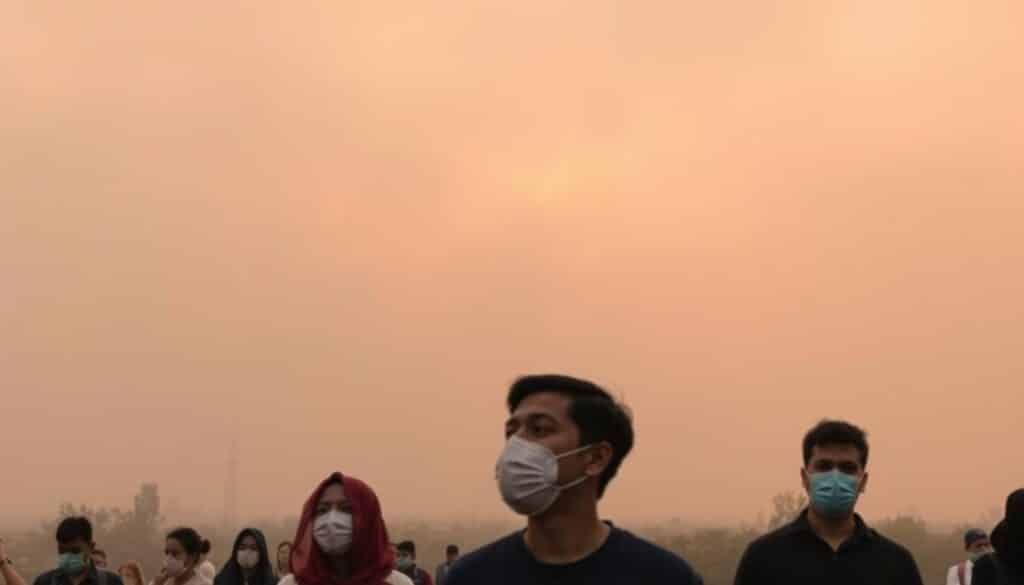
Particle pollution includes tiny airborne particles, especially PM2.5, that can travel deep into the lungs and even enter the bloodstream. Wildfire smoke is a major source of this kind of pollution.
Ozone
Ground-level ozone forms when pollution reacts with heat and sunlight. On hot days, ozone can rise enough to irritate airways and make breathing outside more difficult.
Read more about mouth breathing, nasal congestion, and poor sleep.
Who Should Be Most Careful?
Anyone can feel the effects of poor air quality, but some people are at greater risk. The source text specifically highlights:
- people with asthma
- people with COPD
- people with heart disease
- pregnant women
- infants and young children
- older adults
- people who work outdoors
These groups may notice symptoms earlier and may be more vulnerable during wildfire smoke events or days with very high pollution.
How to Check Air Quality Before You Go Outside
One of the easiest ways to protect yourself is to check the Air Quality Index, or AQI, before spending time outdoors.
The AQI is a color-coded scale that helps explain how risky the air is on a given day. The source material explains that AQI ranges from 0 to 500, with higher numbers reflecting higher health risk.
Here is the general breakdown:
- Green (0 to 50): good air quality
- Yellow (51 to 100): acceptable for most people
- Orange (101 to 150): unhealthy for sensitive groups
- Red (151 to 200): unhealthy
- Purple (201 to 300): very unhealthy
- Maroon (301 to 500): hazardous
The source text also mentions AirNow and other tools that provide real-time updates and smoke maps.
What to Do When Air Quality Is Poor
When pollution levels rise, the main goal is simple: breathe in less of it.
Stay Indoors When You Can
The source article recommends staying indoors with windows and doors closed during poor air quality days, especially during wildfire smoke events.
That means:
- keep windows and doors shut
- postpone outdoor exercise
- avoid unnecessary errands outside
- use indoor air-cleaning strategies when possible
Create a Clean Air Space at Home
The source text recommends setting up a cleaner indoor space by:
- using a portable air cleaner with a HEPA filter
- setting central air to recirculate
- avoiding smoking indoors
- avoiding candles and other indoor smoke sources
- reducing indoor activities that add particles to the air
Even one cleaner room can help lower your exposure.
Use Better Indoor Filtration
The original article explains that filters with a MERV rating of 8 or higher can improve indoor air quality, while HEPA filters offer the highest level of protection against very small particles.
For readers, the practical takeaway is this: better filters remove more harmful particles, but they only help if they are changed regularly and used correctly.
How to Protect Yourself Outdoors
Some days you still need to be outside. When that happens, try to reduce both the length and intensity of your exposure.
Wear the Right Mask
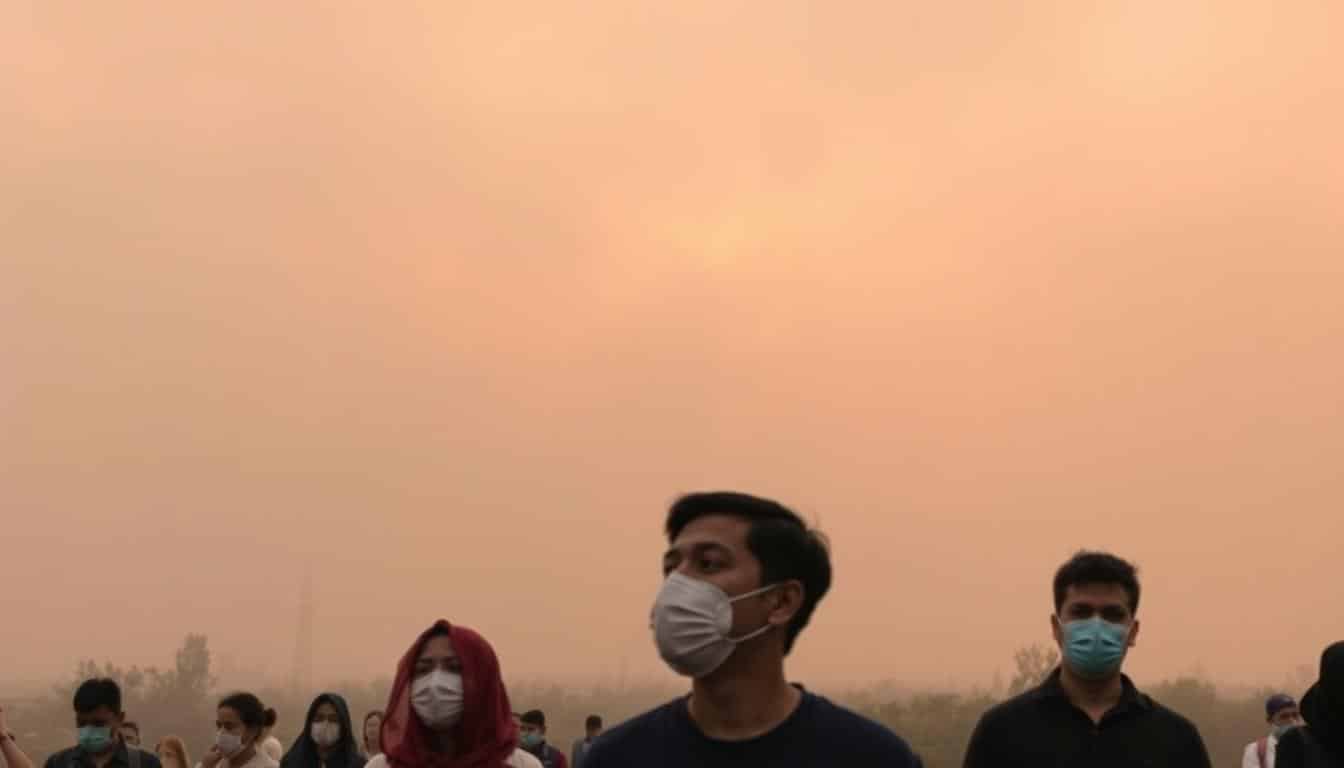
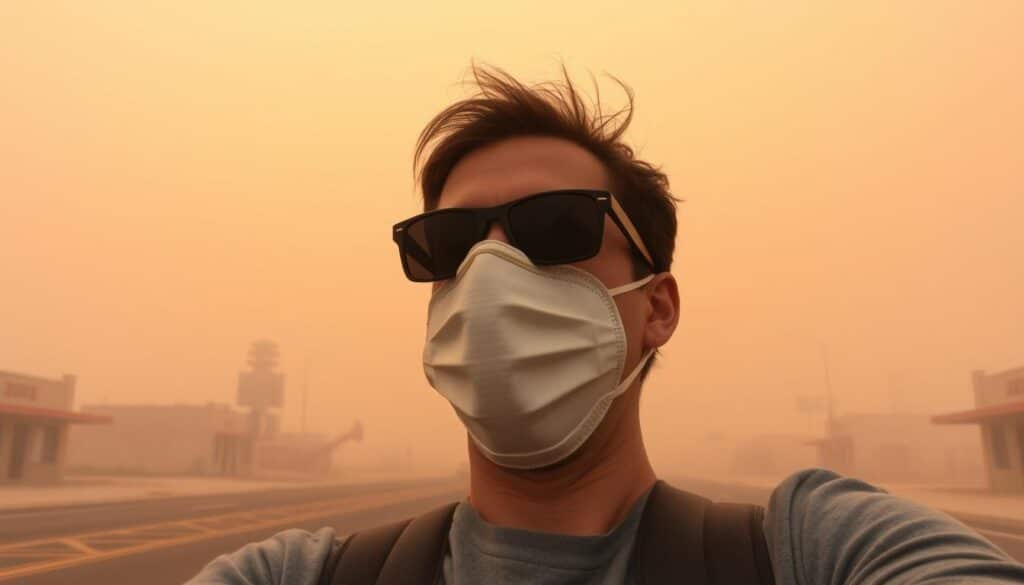
The source material recommends a well-fitted N95 or KN95 mask during poor air quality events. These masks can reduce how many fine particles you breathe in.
A loose mask does not help much. The fit matters.
Avoid Strenuous Activity
The original text warns against hard physical activity when the air quality is low because heavy breathing increases how much pollution you inhale. It suggests choosing lighter indoor movement instead.
That means it may be smarter to postpone:
- running
- yard work
- long walks
- outdoor sports
- heavy lifting outside
Wildfire Smoke Can Be Especially Dangerous
Wildfire smoke deserves special attention because it often contains very small particles and harmful compounds that can irritate the lungs quickly. The source material notes that smoke exposure can cause burning eyes, sore throat, cough, headaches, fatigue, and breathing difficulty.
If you are breathing hard, you may be taking in more smoke even if you are not moving much.
If You Need to Evacuate
The source article gives several practical smoke-safety steps:
- stay in the car with windows closed
- use the car’s air conditioning
- wear an N95 mask if needed
- look for a clean-air shelter if home air is not safe
Learn why poor breathing at night can show up as morning headaches.
If You Have Asthma or COPD, Take Poor Air Seriously
If you already live with a respiratory condition, poor air quality can trigger symptom worsening fast.
The original text advises people with asthma or COPD to work with their doctor, avoid smoke exposure, follow their treatment plan, monitor air quality, and use air filters when needed.
This section is a good place to reassure readers without sounding alarmist. A cleaner version for your site would read like this:
If you have asthma or COPD, do not treat poor air quality as a minor inconvenience. It can raise the risk of flare-ups, increase breathing discomfort, and reduce your margin for error. Check the AQI before outdoor activity, keep rescue and maintenance medications available as directed, and be more cautious on smoke-heavy days.
Can Poor Air Quality Affect Sleep?
Yes. It may not be the first thing people think about, but poor air quality can interfere with sleep in several ways.
When air pollution irritates the nose, throat, and airways, it can make nighttime breathing less comfortable. Congestion, coughing, dryness, and inflammation can all make it harder to settle into sleep and stay asleep. That can leave people feeling less restored in the morning.
This is a strong place to connect your sleep and respiratory content.
Long-Term Improvement Takes More Than Personal Precautions
The source material also discusses the bigger picture. Improving air quality in Bakersfield and the San Joaquin Valley depends on larger efforts, including lower emissions, cleaner transportation, and stronger public policy. It notes that the region has adopted many air-quality rules and reduced emissions, but important challenges remain.
That section works best on your site when simplified:
You can reduce your personal exposure, but lasting improvement depends on cleaner transportation, stronger environmental protections, and better local planning. Personal habits matter, but cleaner community air matters too.
Final Thoughts
You cannot control the weather, wildfire smoke, traffic, or regional pollution patterns. But you can control how you respond.
Checking the AQI, staying indoors on bad days, using better filters, wearing a well-fitted mask, and taking respiratory symptoms seriously can all help reduce your exposure. For people with asthma, COPD, allergies, or nighttime breathing problems, those steps may make a meaningful difference.
For The Sleep and Respiratory Scholar, this article also works well as a bridge piece. It naturally connects respiratory health with sleep, nasal breathing, morning headaches, and broader airway-related concerns. That gives you multiple useful paths for internal linking and cluster growth.
10 SEO FAQ for This Article
1. What does poor air quality do to your lungs?
Poor air quality can irritate the airways, trigger coughing, worsen asthma or COPD symptoms, and increase inflammation in the lungs. Over time, repeated exposure may contribute to more serious respiratory and cardiovascular problems.
2. How do I know if the air quality is unsafe?
Check the Air Quality Index, or AQI. As AQI rises, the health risk increases. Orange, red, purple, and maroon levels call for greater caution, especially for sensitive groups.
3. Is wildfire smoke worse than regular air pollution?
Wildfire smoke can be especially harmful because it contains very small particles that can travel deep into the lungs. It can quickly irritate the eyes, nose, throat, and breathing passages.
4. Should I exercise outside when air quality is poor?
It is usually better to avoid strenuous outdoor activity when pollution levels are high. Heavy breathing can increase how much pollution you inhale.
5. What kind of mask helps with smoke or air pollution?
A well-fitted N95 or KN95 mask offers better protection than a loose face covering because it filters more fine particles.
6. How can I improve indoor air quality during a smoke event?
Keep windows and doors closed, run your HVAC system on recirculate, use a portable air cleaner with a HEPA filter, and avoid indoor activities that add smoke or particles to the air.
7. Can poor air quality make asthma worse?
Yes. Poor air quality can trigger asthma symptoms and make flare-ups more likely, especially during smoke events or high-ozone days.
8. Can poor air quality affect sleep?
Yes. Airway irritation, coughing, congestion, and inflammation can all make nighttime breathing less comfortable and may interfere with sleep quality.
9. Who is most at risk from poor air quality?
People with asthma, COPD, heart disease, older adults, children, pregnant women, and people who work outside may be more vulnerable to poor air quality and wildfire smoke.
10. What should I do if I have COPD and the air quality is bad?
Monitor the AQI, reduce outdoor exposure, follow your treatment plan, avoid smoke, and use air filters indoors if possible. Work with your healthcare provider on a plan for poor air quality days.

Randy Clare is a writer, educator, and health communicator focused on making complex clinical topics easier to understand. He is the author of The Brux Method, host of The Clenching Chronicle Podcast, and a contributor to ClenchAlert. He previously served as Director of Digital Marketing at Glidewell Dental, is President of Hawkeye Group, and co-founded the American Sleep and Breathing Academy.