

Last updated on May 9th, 2026 at 05:22 am
Medically responsible content note:
This article is for education only and does not diagnose or treat medical, dental, or sleep conditions. Bruxism, jaw pain, headaches, snoring, breathing pauses, and respiratory symptoms can have multiple causes. Seek care from a qualified medical, dental, sleep, or orofacial pain professional when symptoms are persistent, worsening, severe, or disruptive.
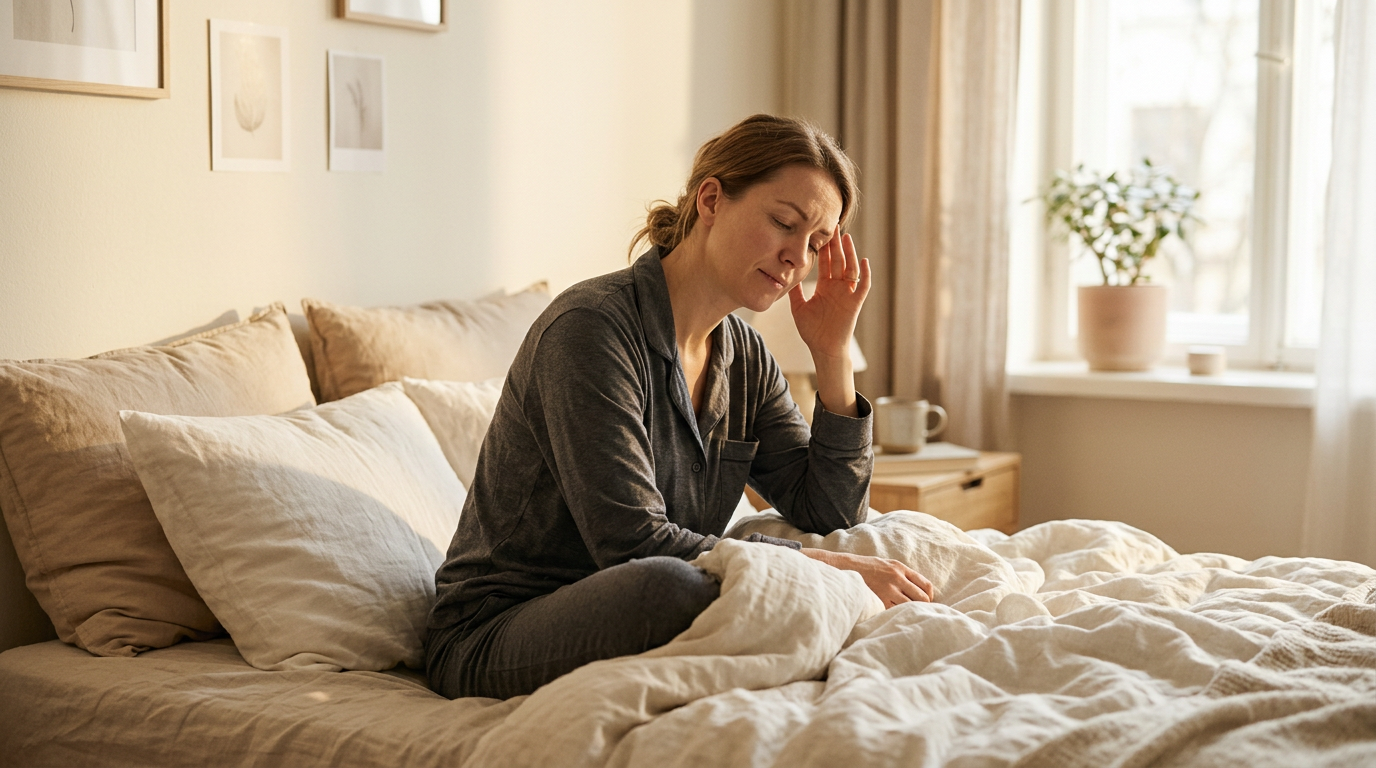
A headache behind the eyes can feel like pressure, throbbing, aching, stabbing pain, or deep facial tension. It may sit behind one eye, spread across both eyes, or travel into the forehead, temples, cheeks, jaw, neck, or ears.
Many people assume pain behind the eyes is a sinus headache. Sometimes it is. However, this type of pain can also come from migraine, eye strain, poor sleep, jaw tension, bruxism, neck tension, or breathing-related sleep disruption.
That is why the pattern matters.
A headache behind the eyes is not always an eye problem. Migraine can be mistaken for sinus headache because both can cause facial pressure, nasal symptoms, and pain around the eyes.¹˒² Sinus disease, eye strain, sleep disruption, and jaw tension can also create symptoms that overlap.
This article will not diagnose your headache. Instead, it will help you notice what travels with it, what triggers it, and who may be the right professional to ask for help.
If your symptoms include temple pressure, pain behind the eyes, ear pain, jaw soreness, facial tightness, morning headaches, or recurring head pain, start with our guide to headache and facial pain.
Quick Answer: What Does a Headache Behind the Eyes Mean?
A headache behind the eyes may come from migraine, sinus pressure, eye strain, poor sleep, jaw tension, neck tension, or cluster headache. Track when the pain happens, whether it is linked to screens, congestion, jaw soreness, snoring, nausea, or light sensitivity, and seek urgent care for sudden or severe symptoms.
Quick Summary: Common Causes of Headache Behind the Eyes
A headache behind the eyes may point toward several different patterns:
- Migraine: throbbing pain, nausea, light sensitivity, sound sensitivity, or pain that worsens with movement
- Sinus pressure: congestion, thick drainage, reduced smell, fever, or pressure that worsens when bending forward
- Eye strain: screen use, blurry vision, dry eyes, squinting, or tired eyes
- Sleep or breathing disruption: morning headache, snoring, dry mouth, gasping, or unrefreshing sleep
- Jaw tension or bruxism: jaw soreness, tooth sensitivity, temple tenderness, ear fullness, or daytime clenching
- Neck tension: stiffness, shoulder tightness, desk posture triggers, or pain that starts near the base of the skull
The most useful question is not only, “Where does it hurt?” Ask, “When does it happen, what else happens with it, and what makes it better or worse?”
What to Do First
If your headache behind the eyes is sudden, severe, unusual, or linked with weakness, confusion, vision loss, fainting, fever with stiff neck, head injury, or trouble speaking, seek urgent medical care.
For recurring pain that does not feel urgent, track the pattern for 7 to 14 days. Pay close attention to timing, sleep quality, snoring, dry mouth, jaw soreness, screen use, congestion, light sensitivity, nausea, and neck tension.
After that, use the pattern to choose the best starting point. That may be a medical provider, eye doctor, dentist, sleep professional, or orofacial pain specialist.
Why Headache Behind the Eyes Can Be Hard to Understand
Headache location can be misleading. The place where you feel pain is not always the place where the problem begins.
Pain behind the eyes may involve several overlapping systems, including:
- Eyes
- Sinuses
- Chewing muscles
- Temporomandibular joints, also called TMJs
- Neck muscles
- Trigeminal nerve pathways
- Migraine pathways
- Sleep and breathing systems
This overlap is one reason people often move from one explanation to another. They may try sinus medicine, new glasses, migraine treatment, allergy care, a mouthguard, or sleep testing before the full pattern becomes clear.
The pain is real. The challenge is that the head, face, jaw, eyes, sinuses, neck, and sleep system are closely connected.
Common Causes of Headache Behind the Eyes
Can Migraine Cause Headache Behind the Eyes?
Migraine can cause headache behind the eyes, including pain behind one eye or both eyes. It may also cause pain in the forehead, temples, face, or neck. Migraine is a neurologic condition, not simply a bad headache.
Migraine symptoms may include:
- Throbbing or pulsing pain
- Pain on one side of the head, although both sides can hurt
- Light sensitivity
- Sound sensitivity
- Nausea or vomiting
- Pain that worsens with movement
- Visual aura in some people
- A need to rest in a dark, quiet room
Many people with migraine never have aura. So, the absence of aura does not rule out migraine.
This condition can also feel like sinus pressure. Some people with migraine have nasal congestion, a runny nose, forehead pressure, or pain around the eyes. That overlap can lead people to call the pain a “sinus headache” when migraine may be part of the pattern.¹˒²
A migraine evaluation is especially important if the pain is repeated, disabling, one-sided, throbbing, or linked with light sensitivity, sound sensitivity, nausea, or aura.
Is Headache Behind the Eyes a Sinus Problem?
Headache behind the eyes can be related to sinus pressure, but sinus-related pain usually comes with more than eye-area pressure. True sinus headache is often related to rhinosinusitis, which means inflammation or infection involving the nasal passages and sinuses.²
Sinus-related symptoms may include:
- Stuffy nose
- Thick or discolored nasal drainage
- Reduced sense of smell
- Pressure around the eyes, cheeks, forehead, or nose
- Aching in the upper teeth
- Fever or feeling ill
- Pain that worsens when bending forward
Sinus infection can be real and uncomfortable, especially when symptoms include fever, thick drainage, reduced smell, and a general feeling of illness.
Still, pressure around the eyes does not automatically mean sinus disease. Migraine can also cause facial pressure, forehead pain, and nasal symptoms.¹˒² When pain is mostly behind the eyes but does not come with thick drainage, fever, reduced smell, or signs of infection, migraine, eye strain, jaw tension, or sleep disruption may also deserve attention.
Can Eye Strain Cause Headache Behind the Eyes?
Eye strain can cause aching behind or around the eyes, especially after long periods of screen use, reading, driving, or close visual focus. Digital eye strain is commonly linked with tired eyes, blurred vision, dry eyes, headache, and neck or shoulder discomfort.³˒⁴
Eye strain symptoms may include:
- Sore, tired, burning, or itchy eyes
- Dry or watery eyes
- Blurred or double vision
- Headache
- Neck, shoulder, or upper back tension
- Trouble focusing
- Symptoms that worsen after screen use
- Relief after visual rest
A quick screen-use check can help:
- Do symptoms worsen after screens or reading?
- Do your eyes feel dry or tired?
- Are you squinting?
- Does visual rest help?
- Do you also notice neck, shoulder, or jaw tension?
An eye exam is important if headaches are linked to vision changes, squinting, eye redness, double vision, or a prescription that may no longer be correct.
Also, notice the posture pattern. Long screen sessions can combine eye strain, forward head posture, shallow breathing, neck tension, and jaw clenching. Together, those small stressors may create a repeatable headache pattern.
Can Poor Sleep Cause Headache Behind the Eyes?
Poor sleep can lower the body’s pain threshold. When sleep is fragmented, the nervous system may become more sensitive to pain, pressure, muscle tension, light, sound, and stress.
Morning headaches are especially important to track. They can occur with migraine, insomnia, bruxism, medication effects, sleep apnea, neck tension, and other medical conditions. Obstructive sleep apnea has been associated with morning headache, although morning headache alone is not specific enough to diagnose sleep apnea.⁵
Sleep or breathing may be involved when headache behind the eyes appears with:
- Morning headache
- Loud snoring
- Waking up gasping or choking
- Dry mouth in the morning
- Morning sore throat
- Restless sleep
- Brain fog
- Daytime sleepiness
- High blood pressure
- Bed partner reports pauses in breathing
- Jaw soreness or tooth sensitivity on waking
Obstructive sleep apnea cannot be diagnosed by symptoms alone. A sleep test is usually needed. Still, repeated morning headaches with snoring, gasping, dry mouth, or daytime sleepiness should not be ignored.⁵
When pain is worse in the morning, do not look only at the eyes or sinuses. Look at the night before. Sleep quality, breathing, clenching, alcohol, screen exposure, and sleep position may all matter.
Can Jaw Clenching Cause Headache Behind the Eyes?
Jaw tension can be part of a headache behind the eyes pattern. The jaw muscles, temples, face, neck, and head share overlapping pain pathways. Temporomandibular disorders, bruxism, and headache disorders can also occur together. Research suggests a correlation between TMD pain and migraine, as well as awake bruxism and tension-type headache.⁶˒⁷
Jaw-related symptoms may include:
- Jaw soreness in the morning
- Temple tenderness
- Tooth sensitivity
- Facial tightness
- Ear fullness or ear pain
- Clicking or popping in the jaw
- Pain with chewing
- Neck tension
- Headache during stress, focus, driving, or computer work
- Teeth touching during the day when you are not eating
This is one of the most missed patterns. Many people do not know they clench. They only notice the result: morning soreness, headaches, tight temples, sore teeth, or facial pressure.
At rest, your lips may be gently closed, but your teeth should usually be apart. If your teeth are touching for long periods during the day, your jaw muscles may be working when they should be resting.
Awake Bruxism vs Sleep Bruxism: Why Timing Matters
Bruxism means clenching, grinding, or bracing the teeth or jaw. It can happen while awake or during sleep.⁸
Awake bruxism often shows up as daytime clenching, jaw bracing, teeth contact, or tension during stress, concentration, driving, phone use, or computer work.
Sleep bruxism happens during sleep. A person may not know it is happening unless a bed partner hears grinding or a dentist notices tooth wear, muscle tenderness, or other signs.
Both patterns can contribute to jaw fatigue and head or facial pain. However, they need different awareness strategies. You can learn to notice awake clenching in real time. Sleep bruxism often requires a broader look at sleep quality, airway risk, medications, stress, alcohol, and dental protection.
For people who clench during the day, biofeedback tools such as ClenchAlert may help build awareness by alerting the user when clenching pressure occurs. This is most relevant when pain is linked to daytime jaw bracing, focus clenching, stress clenching, or repeated teeth contact. ClenchAlert does not diagnose headaches, migraine, sinus disease, or sleep apnea. It may help you notice one possible contributor: repeated jaw muscle activation.
Can Neck Tension Cause Pain Behind the Eyes?
Neck tension and jaw tension often travel together. Forward head posture, screen use, shoulder tension, shallow breathing, and stress can all increase muscle load in the head and neck.
Neck-related clues may include:
- Pain at the base of the skull
- Neck stiffness
- Shoulder tightness
- Headache after desk work
- Pain spreading toward the temples or behind the eyes
- Headache that improves with movement, heat, stretching, or posture changes
This pattern often overlaps with eye strain and jaw tension. Someone may have mild eye strain, mild jaw tension, poor sleep, and desk-related neck tension at the same time. Together, those factors may create symptoms that feel centered behind the eyes.
Headache Behind the Eyes: Common Causes at a Glance
Use this table as a starting point. It does not replace a professional evaluation, but it can help you prepare for one.
| Pattern | What You May Notice | Possible Direction |
| Migraine pattern | Throbbing pain, light sensitivity, sound sensitivity, nausea, worse with movement | Medical or headache evaluation |
| Sinus pattern | Congestion, thick drainage, reduced smell, fever, pressure worse bending forward | Medical or ENT evaluation |
| Eye strain pattern | Worse after screens or reading, dry eyes, blurry vision, squinting | Eye exam |
| Sleep pattern | Morning headache, snoring, dry mouth, gasping, unrefreshing sleep | Medical or sleep evaluation |
| Jaw tension pattern | Jaw soreness, temple tenderness, tooth sensitivity, ear fullness, daytime clenching | Dentist or orofacial pain evaluation |
| Neck tension pattern | Neck stiffness, shoulder tightness, desk posture trigger, pain from base of skull | Medical or physical therapy evaluation |
| Cluster headache pattern | Severe one-sided pain around or behind one eye, tearing, red eye, restlessness, attacks in clusters | Prompt medical evaluation |
Cluster headache deserves special mention because it can cause severe pain in, behind, or around one eye. It is different from ordinary eye strain or sinus pressure and should be evaluated by a medical professional.⁹
What to Track for 7 to 14 Days
A short symptom record is often more useful than a vague memory. Track your headache behind the eyes pattern for 7 to 14 days before your appointment, unless symptoms are urgent.
Timing
- Morning, afternoon, evening, or overnight
- After screen use
- After driving
- During work or focus
- After poor sleep
- After exercise
- After alcohol, caffeine, skipped meals, or dehydration
Pain Quality
- Pressure
- Throbbing
- Stabbing
- Dull ache
- Tight band
- Burning
- One-sided or both-sided pain
Sleep Signs
- Snoring
- Gasping or choking
- Dry mouth
- Morning sore throat
- Restless sleep
- Unrefreshing sleep
- Daytime sleepiness
- Brain fog
Jaw Signs
- Jaw soreness
- Tooth sensitivity
- Temple tenderness
- Ear fullness
- Clicking or popping
- Chewing pain
- Daytime teeth contact
- Clenching during stress or focus
Migraine Signs
- Nausea
- Light sensitivity
- Sound sensitivity
- Visual changes or aura
- Pain worse with movement
- Need to lie down
Sinus or Allergy Signs
- Congestion
- Thick drainage
- Reduced smell
- Fever
- Facial pressure
- Pain worse bending forward
Eye and Posture Signs
- Blurry vision
- Dry eyes
- Squinting
- Neck stiffness
- Shoulder tension
- Symptoms after screens or reading
The goal is not to prove one cause. The goal is to show a pattern.
Who to See for Headache Behind the Eyes
This care-routing table can help you decide where to start.
| Start Here | If You Notice |
| Primary care provider or headache clinician | Frequent, severe, new, worsening, or migraine-like headaches |
| Eye doctor | Blurry vision, eye redness, screen-related pain, double vision, prescription changes |
| Dentist or orofacial pain specialist | Jaw soreness, tooth sensitivity, temple tenderness, clenching, jaw clicking |
| Sleep professional | Snoring, gasping, dry mouth, unrefreshing sleep, morning headaches, daytime sleepiness |
| ENT or medical provider | Thick drainage, fever, reduced smell, sinus infection symptoms |
When the starting point is unclear, a primary care provider can often help rule out urgent causes and guide referrals.
How Jaw Awareness, Biofeedback, and the BRUX Method May Help
If jaw clenching is part of your headache behind the eyes pattern, awareness matters. You cannot change a clenching habit you have not learned to notice.
The BRUX Method can help organize the process:
B: Build Awareness
Notice when your jaw is bracing, when your teeth are touching, and when your headache begins.
R: Relax the Response
Use breathing, posture, and jaw release to reduce muscle guarding.
U: Understand Triggers
Track stress, focus, sleep, screens, posture, caffeine, and pain timing.
X: Exchange the Pattern
Replace clenching with a repeatable rest cue, such as “lips together, teeth apart.”
ClenchAlert may support the awareness stage for people who clench while awake. It is not a treatment for migraine, sinus infection, eye disease, or sleep apnea. Instead, it may help identify whether jaw clenching is one part of the symptom pattern.
When to Seek Urgent Help
Seek urgent medical care if:
- You have a sudden, severe headache
- The headache is the worst of your life
- Vision loss, weakness, confusion, fainting, trouble speaking, or new numbness occurs
- Fever appears with a stiff neck
- The headache follows a head injury
- Severe pain is new for you
- The pattern is rapidly worsening
Do not use tracking, self-care, or online research as a substitute for urgent care when symptoms are severe, sudden, or unusual.
What May Help While You Are Tracking Symptoms
Treatment depends on the cause. Migraine, sinus disease, eye strain, sleep apnea, jaw-related pain, and neck tension are not treated the same way.
While you are tracking symptoms, these supportive steps may help you gather better information:
- Take screen breaks
- Hydrate regularly
- Keep a steady sleep schedule
- Avoid alcohol close to bedtime
- Notice daytime clenching
- Practice “lips together, teeth apart”
- Use warm compresses for jaw or neck tension
- Reduce evening screen exposure
- Track headache triggers
- Schedule an eye exam if vision symptoms are present
- Talk with a medical provider if headaches are frequent, new, or worsening
Supportive steps can help you observe your pattern. They should not delay professional care when headaches are persistent, disabling, new, or getting worse.
FAQ
What does a headache behind the eyes mean?
A headache behind the eyes can mean different things depending on the pattern. It may be related to migraine, sinus pressure, eye strain, poor sleep, jaw tension, neck tension, cluster headache, or another headache disorder. Timing, triggers, and related symptoms help guide the next step.
Can a headache behind the eyes come from jaw clenching?
Yes. Jaw clenching can overwork the chewing muscles and may contribute to pain in the temples, forehead, face, or around the eyes. This is more likely if you also have jaw soreness, tooth sensitivity, temple tenderness, ear fullness, or headaches during stress and focus.⁶˒⁷
How do I know if pain behind my eyes is migraine or sinus?
Migraine often includes throbbing pain, light sensitivity, sound sensitivity, nausea, or worsening with movement. Sinus-related pain is more likely when there is congestion, thick drainage, reduced smell, fever, or pressure that worsens when bending forward. A clinician can help tell the difference.¹˒²
Why do I wake up with pressure behind my eyes?
Morning pressure behind the eyes may be linked to poor sleep, sinus congestion, migraine, dehydration, neck position, sleep bruxism, or sleep-disordered breathing. Track whether the symptom appears with snoring, dry mouth, gasping, jaw soreness, or daytime fatigue.
Can sleep apnea cause headache behind the eyes?
Obstructive sleep apnea can be associated with morning headaches, but pain behind the eyes is not specific to sleep apnea. If you also snore, wake up gasping, have dry mouth, or feel tired despite enough sleep, ask a medical provider whether sleep testing is appropriate.⁵
Can eye strain cause headache behind the eyes?
Yes. Eye strain can cause aching around or behind the eyes, especially after screen use, reading, or long periods of close focus. Dry eyes, blurry vision, neck tension, and headaches may occur together.³˒⁴
When should I worry about headache behind the eyes?
Seek urgent medical care for sudden severe headache, vision loss, weakness, confusion, fever with stiff neck, head injury, fainting, trouble speaking, or a headache that feels very different from your usual pattern. Also seek professional evaluation for frequent, worsening, or unexplained headaches.
What should I track if I keep getting headaches behind my eyes?
Track timing, sleep quality, snoring, dry mouth, jaw soreness, neck tension, screen use, stress, congestion, light sensitivity, nausea, and what helps or worsens the pain.
Conclusion
A headache behind the eyes can come from many possible sources. Migraine, sinus pressure, eye strain, poor sleep, jaw tension, bruxism, neck posture, and breathing-related sleep disruption may all belong in the conversation.
Guessing often creates frustration. The pain location gives you one clue, but the pattern gives you more.
Start by tracking when the pain appears, what symptoms travel with it, and what makes it better or worse. Morning pain may point toward sleep, breathing, or clenching. Pain after screens may point toward eye strain or posture. Throbbing pain with nausea or light sensitivity may point toward migraine. Pressure with congestion and thick drainage may point toward sinus involvement. Pain with jaw soreness, tooth sensitivity, or temple tenderness may point toward bruxism or TMD-related muscle tension.
The next step is not to panic. Instead, notice the pattern clearly enough to bring better information to the right professional.
The pain may sit behind your eyes, but the pattern may begin somewhere else.

Randy Clare is a writer, educator, and health communicator focused on making complex clinical topics easier to understand. He is the author of The Brux Method, host of The Clenching Chronicle Podcast, and a contributor to ClenchAlert. He previously served as Director of Digital Marketing at Glidewell Dental, is President of Hawkeye Group, and co-founded the American Sleep and Breathing Academy.